The Will and the Way
The Political Case for Reparations

Part I
In October of 2025, Gavin Newsom sat down at a desk in Sacramento and did two things at once. He signed reparations into California law, and he refused them.
The signing was real. Newsom put his name to Senate Bill 518, creating the Bureau for Descendants of American Slavery, the first state agency of its kind anywhere in the country: an office built to certify who descends from the people the nation enslaved and to assemble the machinery by which those descendants might one day file their claims. He signed a companion bill putting six million dollars behind the genealogical research that certification would require. These were the bills that acknowledge, study, and count. The Reparations Task Force that produced them had spent two years and eleven hundred pages establishing, in granular and unanswerable detail, what had been taken and from whom, and Newsom signed the parts that wrote the finding into the state’s permanent record.
What he vetoed, in the same stretch of days, were the bills that would have handed someone something. A priority in college admissions for the descendants of the enslaved. A pool of home-loan money set aside for them, and them only, to buy a first house. Restitution for families whose property the state itself had once seized through racially aimed eminent domain. The reasons he gave varied from bill to bill, and not all of them were about money or law; one measure he called simply unnecessary. But the worry he kept returning to, the one that matters most here, was legal risk: a benefit keyed to ancestry, he warned, might not survive a court. The bills he signed certify who is owed. The bills he vetoed would have begun to pay. Those were the ones he could not bring himself to sign.
He had told the country where the line would fall two years before he drew it. In the spring of 2023, when the Task Force delivered its recommendations and the proposal to compensate descendants directly was the thing everyone was arguing about, Newsom answered with a sentence worth writing down exactly, because it repays a close reading. “Dealing with the legacy of slavery,” he said, “is about much more than cash payments.”
He is right. It is. The sentence is also a refusal. “About much more than cash payments” is the capacious, unarguable, faintly consoling form of the words “not cash payments.” No one can quarrel with the larger claim. The legacy of slavery is about much more than money, the way grief is about much more than a casket. But the large true thing is doing a small specific job. It is carrying the no across the threshold so that nobody has to be caught saying it.
The easy move is to call Newsom a hypocrite, and it is the wrong one. He is more useful to us than that. He is the most sympathetic witness imaginable to a refusal that runs through the whole country, and he is making it in daylight, with his signature on it, in the same season he created the first reparations agency the nation has ever had. If the refusal lives in him, it lives everywhere.
And it does. Ask Americans the blunt version of the question, as the University of Massachusetts has done in its national polling, and the answer holds still: when the payer is the federal government and the form is cash, 38% say it should be done, and 61% say it should not. A clear majority against. Move down the same list of repairs, though, and the resistance softens. Ask whether the government should formally apologize for slavery and a slim majority, 52%, says yes. Ask about free college tuition for the descendants of the enslaved and 43% say yes, still above the cash number. The shape repeats wherever the question is put with care. Americans will apologize first, educate second, and pay cash last. Cash is the floor.
The reflexive reading is that the country has considered reparations and declined them, and that the low cash number is simply the place where its real mind shows through. That reading is wrong. The clearest evidence comes from the people with the most reason to want the money.
When the Pew Research Center put the question to Black Americans, 77% said the descendants of the enslaved should be repaid in some way. Pew then asked those supporters which forms would help most. Educational scholarships came first, at 80%. Help starting a business, 77%. Help buying or repairing a home, 76%. Cash came last, at 69%. Last. The people likeliest in the whole country to want the money in hand still rank the bare transfer of it beneath every repair that routes the money through an institution on the way.
And this is not just an artifact of how the question gets asked. Run the comparison as a controlled experiment and the penalty surfaces on its own. Some years ago a researcher named Thomas Craemer did exactly that. He took a nationally representative sample, described a single reparations proposal, and changed nothing about it from one group to the next except the form the repair would take. When the form was a cash payment, support sat at its lowest. Offered a formal apology instead, the same proposal gained more than twenty percentage points. Offered education, twenty-three. Apology and education came out statistically even with each other; cash stood alone at the bottom, and the gap was not narrow. The form alone moved a fifth of the country. Whatever the penalty is, it rides with the form. It is the check, specifically, that Americans refuse.
That gap is where this starts. Not the gap between the people who want reparations and the people who do not; that one is real, and endlessly discussed, and not in the end the interesting one. The interesting gap opens up inside the yes. It runs between the apology and the check, between the scholarship a descendant is trusted to spend and the dollar she is not, and it runs through nearly everyone who comes near: through the moderate who grants the history and flinches at the bill, through the governor who builds the bureau and vetoes the fund, through the Black supporter who has weighed it longer than either and still puts the cash last. Almost everyone who has come as far as yes has come to this same border and stopped.
The two pamphlets before this one walked up to that border from opposite sides. The first argued that the debt is real: named, documented, promised, and never paid, a debt older than the republic that owes it. The second argued that the debt is payable, that the money plainly exists, and that the conservative tradition, held to its own word about property and markets and restitution, arrives at cash reparations whether it intends to or not. Between them they settled the two questions that always get asked first. Is it owed. Can we afford it. Yes, and yes.
What they left on the table, on purpose, is the hardest of the three. Two questions, really, folded into one. Whether the debt will be paid in the form that treats the people owed as adults who can be handed what is theirs. And whether a country this divided can assemble the will to do something this large together. The form and the will. Those are political questions, not moral or financial ones, and politics is where reparations have always gone to die.
Everyone already knows the answer, or believes they do. Cash reparations are impossible. The first two pamphlets closed the other exits, the moral one and the fiscal one; what is left is that last word, and it is the heaviest. Impossible, in the actual country we live in. That word carries more of our politics than almost any other, and it is the least examined of them all. Newsom’s veto is what impossibility looks like at close range: the friend, not the enemy, easing the door shut, having concluded on your behalf that the room past it cannot be entered. The sentence about much more than cash payments is the sound the door makes going closed.
So the question I mean to begin with is not whether Americans support cash reparations. They mostly do not, and to pretend otherwise would be its own small dishonesty. The question is what that refusal is made of. When 52% will apologize and 38% will pay, when even the supporters rank the check beneath the scholarship, what exactly is sitting in the gap between? If it is what the polls are usually taken to prove, a country that has weighed cash reparations and found them wanting, then there is nothing here to build, and this is wasted breath. But if the gap is made of something else, something nearer to a habit, or a fear, or a story we have all been told about what a divided people can and cannot do, then it is not a verdict at all. It is an obstacle. And an obstacle, unlike a verdict, is the kind of thing that can be crossed.
Part II
So: what is the gap made of?
Before answering, separate the people standing in it, because three different kinds are crowded onto the same square and they do not want the same thing. The first owes nothing and knows it. He believes the debt is imaginary, or settled, or someone else’s, and he opposes every form of repair, the scholarship and the apology along with the check, though he will object to the check most loudly because it is the easiest to make sound absurd. The second grants the debt. She accepts that something was taken and something is owed, she will back the scholarship and the housing program and the apology, and she stops at cash. The third would pay the cash, in principle, but doubts it can be done, worries about the size of it, the administration of it, who would qualify and how. Three people, three refusals, and almost everything written about reparations polling blurs them into one number. The argument that follows needs all three and cannot afford to keep mistaking one for another.
Start with the first, because the loudest evidence is about him. The explanation everyone reaches for is money. Cash is the most expensive-sounding of the repairs, the one that reads as a line item, the version a taxpayer can picture arriving as a charge against his own account. So the natural assumption is that the country has looked at the price and flinched.
It has not. The same University of Massachusetts pollsters who measured the cash penalty went further and asked the people who oppose reparations to give their reason, a single reason chosen from a list. Expense was on the list. So was administrative difficulty. If the resistance were about cost, this is where it would surface, and it does not. Among white opponents, “too expensive” drew 5 percent. Administrative difficulty drew 16. The reason that carried the weight, chosen by 32 percent, was that the descendants of the enslaved do not deserve the money. Another 23 percent answered that Black Americans are already treated equally, so nothing remains to repair. Those two are one judgment wearing two faces. The first says the people are unworthy of the debt; the second says the debt is already discharged. Together they are most of the opposition, and together they locate it exactly. The trouble is the recipient.
How deep that runs, the same researchers measured. When they tested what predicts opposition to reparations, racial resentment did not sit politely behind party and ideology. It rivaled them, and sometimes outran them: a person’s measured resentment told you about as much as his partisanship did, now and then more. Trace the polling from 2001 to 2023 and the picture holds steady. Opposition stays high, concentrates among white Americans, and rests disproportionately on the belief that the descendants are undeserving and the country has already done enough. This is not a comfortable finding and there is no honest way to dress it as one. For the first person in the gap, the resistance to cash is the old American difficulty about race, wearing the fiscal clothes it has learned to wear in company.
The tempting thing, having named that hard core of opposition, is to set them aside as a lost cause and write the rest to the people already most of the way here. I want to refuse that, and not only because it is bad arithmetic, though it is. A movement that excommunicates everyone who begins in the wrong place does not grow. It shrinks to the size of its own purity and learns to call the shrinking integrity. And the belief that the resentful cannot change is the same counsel of impossibility this whole argument exists to refuse, turned from the policy onto the person, and it carries the same self-fulfilling trick: concede that a man cannot be moved and you have guaranteed that nobody will try, which is the only thing that ever moves anyone. I do not believe the verdict about standing is fixed in a person, because I have watched too much of this country’s mind change inside a single lifetime to believe it. The nearest work runs through the people who already grant the debt. But the door does not close behind it. If you have read this far and still feel the pull of the first man’s objection, the suspicion that nothing is really owed, you are not being cast out of this. You are being asked to stay.
Hold onto him, then, but see clearly what his presence does and does not explain, because the temptation is to let the deservingness finding account for everything, and it cannot. It explains the hard no: it tells you why the people who reject every form reject it, and that the reason is the recipient, not the price. It does not tell you why the second person, who already supports the scholarship and the apology, still puts the check last. The man who refuses reparations because he thinks nothing is owed has no opinion worth measuring about the difference between a scholarship and a cash payment; he is against both. To learn what the cash penalty is made of, you have to look at the people who have already said yes to repair and stopped at its bluntest form, and the deservingness findings, which describe opponents, do not reach them. The gap inside the yes is a different gap, and it needs a different account.
That account has at least two parts, and honesty requires holding both.
The first part is a gentler relative of the hard no. Some of the people who back the scholarship and balk at the check are making, in a softer register, the same judgment about standing the resentful opponent makes in a hard one. They will trust the descendant with an opportunity but not with a dollar; they will fund the program that helps her and hesitate at the money she would simply hold. The clearest specimen is the one we began with. Newsom does not belong with the hard no, and he built the nation’s first reparations agency, and it would be a slander to file him there. But “dealing with the legacy of slavery is about much more than cash payments” is the courteous cousin of the same verdict. The position does not call the descendants undeserving. It says, more gently, that what they are owed is better handled on their behalf, routed through a bureau and a study and a scholarship and disbursed under a signature, than placed in their hands as money they would govern themselves. Whatever sits in the governor’s heart, and it may be nothing but goodwill, the structure of the stance is a judgment about whether the people owed can be treated as adults who decide for themselves. The resentful man withholds the check because he thinks she has not earned it; the sympathetic stance withholds it on the theory that the money does more good when someone else steers it. The motives are not the same, but the shape of the result is.
The second part is harder for this argument, because it cannot be filed under prejudice at all, and the proof of it comes from the people with the most standing to know. Among Black supporters, cash also ranks last. Scholarships 80, business help 77, housing 76, the check at 69. Whatever explains that, it is not white doubt about Black competence, because the people doing the ranking are Black Americans themselves, the people with the most reason to want the money in hand. So there are real reasons, held in good faith and often held hardest by the people owed, to prefer a repair that routes the money rather than hands it over. A scholarship or a house compounds across a life; a lump sum can be spent once and vanish. There is a long strand of Black reparations thought that never wanted individual checks in the first place, that asked instead for land, for institutions, for community-controlled capital, for the kind of structural repair a payment to individuals does not build. And there is the plain political worry that a one-time check is the most fragile form of all, easy to hand out once and easier to point back to forever as the debt paid in full. These are not flinches. They are arguments, and they are owed answers rather than a diagnosis.
One thing the cash penalty is not, in any of the populations, is an information deficit. That has been tested directly. When researchers gave Americans detailed accounts of the specific harms the government inflicted, the mortgages refused, the New Deal protections written to exclude Black families, the wealth deliberately blocked, support for cash reparations did not move. Whatever the resistance reaches for, it reaches past the facts, which were never quite the thing in dispute. This matters for strategy more than for honesty. If the gap were ignorance, the work would be teaching, and it is not ignorance, so it is not teaching.
So the cash penalty is overdetermined, and saying so is not a dodge but the actual finding. Part of it is the hard no’s verdict about standing, which is large, and ugly, and the slowest of everything here to move, though not, as I have said, beyond moving. Part of it is the soft middle’s gentler doubt about whether the descendant can be handed what is hers, which might move sooner. And part of it is a principled preference for routed repair, held by people of goodwill across every race, which does not move because it should not, unless the principle turns out to be unsound. How large the convertible middle is, and how much of its hesitation is doubt that can be answered against principle that should not be, the polling cannot finally say. What the polling can say is more modest, and still worth a great deal. The check is not the place where the country weighed cash reparations and rejected them. It is the place where several unlike hesitations happen to land on the same square.
Which leaves one of those hesitations standing in the way of everything else. If the good-faith reasons for routing the money around the recipient are sound, then the soft middle is not refusing the repair at all. It is choosing the wiser form of it, and there is nothing here to build. So that preference had better survive a hard look. It is time it got one.
Part III
The question is whether the good-faith preference survives a hard look. It starts from a strong place, because the in-kind position is the most reasonable-sounding stance in the whole argument. It concedes everything the hard no will not. Yes, a wrong was done; yes, a debt is owed; yes, the country should act, and act with real money behind it. It asks only that the money arrive as a scholarship, a housing program, a fund for Black-owned business, rather than as a check. To the person who holds it, this is the generous middle, more than the skeptic offers and less reckless than the radical demands. It is the position a thoughtful governor signs into law. And it rests on one assumption that is never defended out loud: that the descendant can be trusted to use the help, but not to hold the money.
The descendants’ own rankings force a distinction into the open. There is a world of difference between a woman handed cash who chooses to spend it on her own tuition, and a woman handed the tuition. The destination is identical. The standing is opposite. The first is a woman spending what is hers on what she judges best; the second is a beneficiary receiving what someone else judged best for her. When Black supporters rank a scholarship above a check, many of them are making exactly that kind of considered judgment, that an education compounds across a life where a lump sum can scatter, and they may well be right. The point is not that they are wrong to prefer it. The point is that the preference is theirs to hold. A descendant who weighs the forms and chooses the scholarship is a free person making a choice. The same descendant handed the scholarship in place of the choice is a ward. The form can match exactly; what differs is who decided, and in the paying of a debt, who decides is not a detail but the difference between settling what is owed and managing the person you owe.
This is why cash is not the atomized, every-man-for-himself form its critics take it for, and also why it is not the universal solvent its champions sometimes imply. Handed the money, the descendant can buy the scholarship, make the down payment, capitalize the business. She can also pool it with others toward the things the long tradition of Black reparations thought has asked for: land held in common, a community bank, an institution built and governed by the people it serves. Pooling is real work and carries real costs, the coordination and the trust and the sustained effort any collective thing demands, and cash in a private hand does not by itself raise a school or a hospital or a body of protective law. What cash does is keep the choice, the individual form and the collective one alike, with the people owed, instead of settling it for them in advance. A serious reparation might well build collective and institutional repair alongside the payments. The only question is whether the descendants choose those forms or have them chosen on their behalf. The difference was never whether the money can build institutions. It is whose hands decide which ones get built, and whether.
There is a word for substituting an authority’s judgment for a person’s own about her own good, on the theory that she cannot be trusted to choose well. The word is paternalism, and it belongs here plainly, because the in-kind compromise is paternalism offered as generosity. Not the descendant’s preference for a scholarship, which is a choice she is entitled to make. The state’s decision to hand her one instead of the money, which is the quiet removal of the choice.
And reparations is close to the worst case for it, because of what reparations is. A welfare program can arguably attach conditions; it is aid, and the giver may fairly ask how aid gets used. A debt is a different thing. When you owe a person money, you do not get to pay it into an account you control and release it for purposes you approve. The debt is hers. Paying it discharges your obligation and puts the thing owed into her hands, to use as she sees fit, precisely because it stopped being yours the moment you admitted you owed it. To pay reparations as a managed program is to keep one hand on the money after conceding it is no longer yours, to discharge the debt and retain custody of it in the same motion. It treats the creditor as a ward. And where a cash payment would still ask her to prove her claim, the managed program goes further: it dictates what the money may be spent on and makes her account for it afterward, as no one paid what they are owed is ever made to do. A scholarship says we will provide for you. A check says here is what was taken; it is yours now. The distance between those two sentences is the distance between charity and justice.
The case that cash respects a person where a program manages him is not, at its most rigorous, a left-wing case. It is Milton Friedman’s. He gave a chapter of Capitalism and Freedom to the best mechanism for relieving poverty and answered without a hedge: cash, a negative income tax, because it gives help in the form most useful to the individual, who knows his own needs better than any administrator can. Conservatives did not build a movement on that conviction; the tradition has more often reached for work requirements and in-kind aid than for a check with no strings. That is the point to press, not a problem with it. The argument that cash respects the person is conservatism’s own best thinking, worked out by its most rigorous mind, and it gets invoked against the welfare bureaucracy and quietly dropped the moment the person to be trusted with the money is someone the tradition would rather supervise. The in-kind compromise asks the country to extend to the descendants of the enslaved exactly the distrust that conservative economics, followed honestly to its end, cannot justify.
One real worry sits under all of this and deserves a real answer: maybe the distrust is warranted, maybe people handed large sums squander them, and the program saves the recipient from herself. It is testable, and it has been tested, most closely on people who come into sudden windfalls, lottery winners above all. The picture that comes back is not the cartoon. Winners do not, as a rule, dissolve their luck; they tend to save a good part of it, buy durable things, and keep working. The findings are not perfectly uniform, and at least one well-known study found a large prize could postpone a bankruptcy rather than prevent it. But the specific fear beneath the in-kind preference, the descendant who blows it all and is left with nothing, is the one the evidence declines to support. What the evidence does not settle, and does not pretend to, is the larger question of whether individual payments or collective institutions do more good across a life. That question is real. It is simply not the same question as whether she can be trusted with money, and it is the second one the paternalism was built to answer, with a no the evidence will not bear.
And the distrust is selective, which is what gives it away. The country moves money to people without supervision all the time. It pays Social Security as cash, not as vouchers for approved retiree purchases. Every year it transfers vast fortunes to the children of the wealthy, who inherit on the single qualification of who their parents were, with no means test, no competence review, no caseworker assigned to keep the heir from wasting the estate on something foolish. We built an entire body of law to deliver unearned money to people on the strength of lineage alone, and nowhere in it does anyone propose the funds would be safer managed on the heir’s behalf. The descendant of the enslaved, owed a debt the country concedes, is about the only recipient for whom the supervised account suddenly recommends itself. That is not a principle about cash. It is a judgment about a person.
The managed account is not a neutral instrument either, because the country has run this exact experiment, and it is worth remembering how it came out. In 1865, in the same season it freed four million people, Congress chartered the Freedmen’s Savings and Trust Company to hold the money of the newly free, and Lincoln signed it into being days before he died. Freedpeople trusted it; it carried the government’s blessing, and many believed it carried the government’s backing, though in law the deposits were never guaranteed. They opened tens of thousands of accounts and deposited the first savings of the first free generation. Then the white trustees who ran it began to gamble the deposits on railroad bonds and speculative real estate and unsecured loans to themselves and their friends, and in 1874 it failed. Frederick Douglass, made president in its last months, put thousands of his own dollars into trying to save it and understood too late that he had been handed the books only to preside over the funeral. Tens of thousands of depositors were owed millions of dollars; the lucky ones recovered about half, after years of waiting, and a great many recovered nothing. That is the country’s record of holding Black money for its own good. The descendant told her repair is safer managed on her behalf is being asked to trust the manager a second time, when it is the manager, and not the descendant, whom the history convicts.
This is the paternalism the governor enacted, gently. He signed the bill to certify who the descendants are, funded the study to trace their genealogies, and vetoed the rest. The state will research your lineage and will not trust you with what the lineage entitles you to. There is no cruelty in it, and that is what makes it hard to see for what it is: the most decent available form of the refusal still ends with the descendant handed an ancestry report and denied the repair the report would prove she is owed. Good intentions do not change the shape of the gesture, which is a guardian’s and not a debtor’s.
So the good-faith preference survives, but only as far as it truly reaches. There are real reasons to want collective and institutional repair, and a just settlement could carry them, in any of a dozen mixed designs: cash and common funds together, a payment a descendant may take as money or direct into a trust, recurring transfers, institutions governed by the people they repair. The whole field of real reparative design is open. What is not in that field is the one position this section set out to test, the stance that grants the descendant every form but the cash, that offers her the program and keeps the check. That is not a choice among forms. It is the removal of the choice from the person owed, and it does not hold. It is paternalism where it is least warranted, aimed at a danger the evidence cannot find, reserved for almost no one in the country but the people owed this one debt. Take it away, and what collapses is not the case for collective repair, which stands on its own. What collapses is the comfortable middle that accepts the debt and will not put it in the creditor’s hands.
Naming the paternalism does not dissolve the politics, though, and here the argument has to meet the hardest objection it will face, the one no amount of clarity about cash and standing can talk its way past. Grant all of it. Grant that the debt is real, that cash is a legitimate form of it, that the distrust is a prejudice the data refute. A cash payment to the descendants of the enslaved is still a transfer marked, openly and unavoidably, by race, and a politics that asks a multiracial country to tax itself and hand the proceeds to a single group named by lineage is a politics that may come apart in the asking. That is not the paternalist’s objection. It is the strategist’s. It is serious, and it is the one the rest of this has to answer.
Part IV
The strategist is not a bigot, and his objection is not a dodge. He has looked at the same country we have and drawn a conclusion the evidence supports. A cash payment to the descendants of the enslaved is a transfer of money from a multiracial public to one racial group, named as such, and American politics keeps a long, well-documented record of what happens to policies the public comes to understand that way. They lose. The political scientist Michael Tesler has spent a career measuring the effect, and it has a name: racial spillover. When a policy becomes coded in the public mind as something done for Black people, the Americans most resistant to racial change move against it, whether or not the policy was about race to begin with. Tesler watched health care lose support once it became Obama’s; he watched the racial resentment of white voters bleed into questions that, on their face, had nothing to do with race. The strategist has this on his side. A repair the country reads as a racial transfer is a repair the country has shown it will refuse.
The evidence is not all one way. When the Center for Health Justice ran a controlled test of reparations-adjacent policies, it did not simply paste the words racial justice onto identical proposals. For several measures it varied how the repair was aimed, the same policy described plainly or described as targeted to the communities a racial wrong had harmed. Naming the racial aim did cost support, on some policies by double digits. But the drop was uneven, and on most of the measures the racially targeted version still held its majority. The salience of race is a real weight on the scale and not an automatic defeat. It pulls support down without, in most cases, pulling it under. That leaves more room than the strategist’s gloomiest reading allows.
Still, the weight is real, and naming why it exists is what makes it answerable. A racial transfer is heavy not because Americans run the numbers and find the price too high. It is heavy because it wakes the oldest and most profitable story in American life, the one Heather McGhee calls the zero-sum hierarchy: the belief that the races are locked in a fixed contest, one pie, a gain for them a loss for you. W.E.B. Du Bois named the machinery a century ago. The poor white worker, paid starvation wages by the same planters who looked down on him, was compensated in a second currency, a public and psychological wage: the standing of being white, the deference, the assurance that however far he fell he stood above an entire people beneath him. The zero-sum story is how that wage gets paid, and it costs the men who pay it nothing and earns them everything, a working class kept too busy guarding its small racial dividend to notice whose hand is in its pocket. A racial transfer, presented as a transfer, drops straight into that story’s waiting slot. Money to them, less for you. The frame writes itself, because someone has been writing it, at a profit, for three hundred years.
So the danger is real and it lives in one specific place. It lives in the stakes, the story of who wins and who loses, and not in the repair itself. The repair, the thing the check does, must stay precisely what justice requires: it goes to the descendants of the enslaved, by lineage, in payment of a debt owed to them and to no one else. That cannot be softened, universalized, or laundered into a race-neutral program that happens to help Black Americans on the way to helping everyone. The temptation to do exactly that is enormous, and it wears respectable clothes, the baby bond, the universal trust, the colorblind wealth-builder, and it is the soft refusal in its most sophisticated dress, the same paternalism that funds the program and withholds the cash, scaled up and fitted out as universal policy. To answer it is a racial transfer by making the repair no longer racial is to surrender the whole question. The repair stays racial because the debt is racial. What can change, and must, is the story the country tells about what paying it would do to the country that pays.
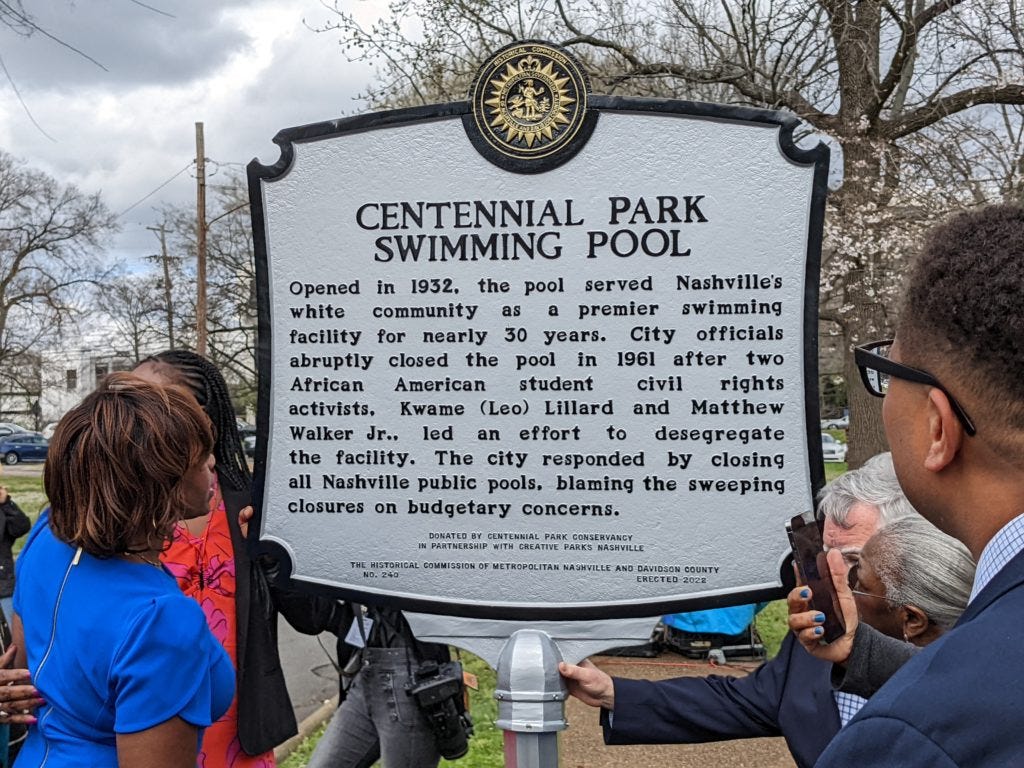
McGhee gives that story its image, and it is the right one. After the courts ordered public swimming pools desegregated, towns across America did a thing that looks, at first, insane. Rather than let Black families into the town pool, they drained it. They poured concrete into the deep end, padlocked the gates, and the white families who had vowed never to share the water lost the water too. The zero-sum story had taught them that integration meant loss, and so, rather than share a public good, they destroyed it, and everyone walked home hot. McGhee follows the same shape across health care and housing and schools and wages: again and again, rather than share, America drains the pool, and the thing it ruins to keep from Black hands turns out to be a thing that would have served everyone. The unpaid debt is the largest drained pool in the country’s history, a nation choosing for a hundred and sixty years to go without the thing it might be rather than pay what becoming it would cost.
If that sounds like a theory, it is not. The country has run the experiment, and the place to watch it run is the 1890s.
In 1890 a white Alabama Democrat named Walter Vaughan began pushing a startling idea: that the United States should pay pensions to the men and women it had held in slavery, on the model of the pensions it paid Union veterans. Vaughan was no abolitionist. He sold the plan, deliberately, as something other than justice to the freedpeople. He sold it as relief for the white South. The pension money, he argued, would pour out of the freedpeople’s hands and into the South’s wrecked economy, into the stores and the rents and the tax base of a region still flat on its back from the war; it would ease the burden on white taxpayers already supporting destitute ex-slaves. The repair would go to the freed slave. The benefit, in Vaughan’s telling, would go to the men who had owned him. He printed the argument in a pamphlet, organized clubs around it, and over thirteen years got nine versions of the bill introduced into Congress.
Consider the man who carried one of them into the Senate. In December of 1899, the ex-slave pension bill, Senate 1176, “to provide pensions for freedmen,” was introduced by Edmund Pettus, Democrat of Alabama. Pettus had been a Confederate brigadier general. He would help write Black disenfranchisement into Alabama’s constitution of 1901. The Encyclopedia of Alabama records that in 1877 he served as Grand Dragon of the state’s Ku Klux Klan; a minority of historians dispute whether he held that formal office, but none dispute the man, who testified before Congress in 1871 that the true victims of Klan terror in the South were white. His name is on the bridge at Selma, the one the marchers were beaten on in 1965. This is the man who rose in the United States Senate and asked it to pay reparations to the people he had spent his life keeping down.
He did not do it because anything in him had softened toward the people it would pay. Nothing in the record suggests it had, and his later work writing them out of the vote suggests it had not. What the record shows is narrower and still arresting: a Confederate general put his name to a freedmen’s pension bill once the money had been recast as relief for the white South. We do not have his private reasons, and it would claim too much to say we know exactly what moved him. But the shape is plain. You did not have to convert Edmund Pettus to get his sponsorship. You had to make the repair pay a debt he already wanted paid. That is a smaller thing than a coalition, and it is not nothing. It is the most resentful man in the room moved, not in his heart but in his interest, which is the one place a man like that can be moved at all.
The story does not end well, and the way it fails is part of what it teaches. The bills never passed; Senate 1176 was reported out adverse and died. The grassroots movement that grew up around the idea, the National Ex-Slave Mutual Relief, Bounty and Pension Association, was built by a formerly enslaved woman named Callie House into the first mass reparations movement this country ever saw, and the federal government hounded it and finally destroyed it, sending House to prison on a charge of using the mail to defraud. House herself is best understood as sincere, and her prosecution as the government’s way of killing a Black movement it would not tolerate; the fraud charge was the pretext. The pension ferment did draw real fraud at its edges, rival outfits selling fake certificates to desperate people, and Vaughan himself appears to have cleared a small fortune in fees. But the lesson is not that the movement was a swindle. It is that the reframe was strong enough to start something and far too weak to keep it alive. The shared-stakes story put a reparations bill in a Klansman’s hand and could not protect the people who believed in it from prison and ruin. It is a lever, not a guarantee.
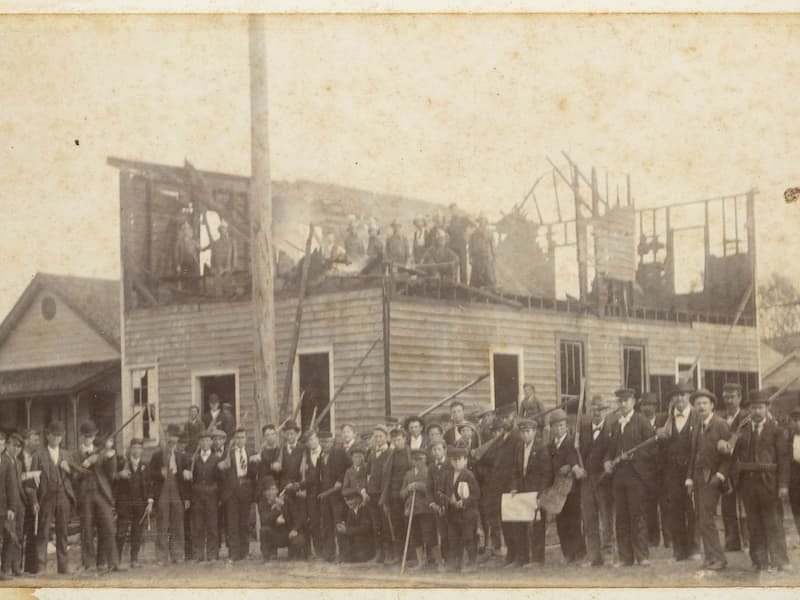
The same decade proves the second half of that lesson in blood, in the state I write from. In the 1890s a coalition the country is taught to believe is impossible actually governed North Carolina. It was called Fusion: an alliance of the largely Black Republican Party and the largely white Populist Party, dirt farmers and freedmen’s sons who had worked out that the railroad men and the planters were fleecing them both and that together they were a majority. They won, and not by a little. They took the legislature in 1894 and again in 1896, and the governorship with it. In Wilmington, then a Black-majority city with a thriving Black middle class, they ran an elected, biracial government, the precise thing the zero-sum story says cannot exist, working, in the Jim Crow South. And it was destroyed, deliberately, by men who understood the threat exactly. The Democratic machine ran the white-supremacy campaign of 1898 on the pure zero-sum message, the cry of “Negro domination,” their gain as your loss, and when the propaganda had done its work the violence finished it. On November 10, 1898, in what is often described as the only successful coup d’état on American soil, a mob of some two thousand white men burned the Black newspaper, killed an uncounted number of Black residents, and drove the elected government out of the city at gunpoint. Two years later the state wrote disfranchisement into its constitution to be sure the coalition could never reassemble. The pool was not drained in 1898; it was burned, and the ash salted.
Hold both edges, because the strategist is owed the sharp one. Wilmington proves the coalition is possible; it governed. It also proves the coalition is killable, and that the men who profit from the zero-sum story will reach for propaganda and then for guns. Loury, when we reach him, can fairly say the destruction is the more instructive half, that a coalition which has to be murdered is a coalition that lost. He is half right. You do not burn a thing that cannot exist, and you do not write disfranchisement into a constitution to prevent the return of a coalition that was never a threat; the salting is the confession that it was real. But how you build one that survives its enemies is a harder question than this argument can fully answer. The constitutional route offers part of the answer, a settlement lodged where a later majority cannot simply repeal it, and no part at all against a mob, because no clause on paper ever stopped one. What the 1890s settles is the first thing only, and it is the thing the despair denies: that the coalition can exist at all. The rest is work, and the work has no guarantees.
What actually moves a person into that coalition is not the argument, whatever the instinct says. When the researchers behind the Race-Class Narrative Project tested rival messages on thousands of Americans, the strongest was neither the colorblind economic appeal that asks people to forget race nor the race-first appeal that speaks only of racism. It was the one that names both at once: that the powerful have always used racism to divide working people of every color so they can rig the rules, and that the answer is to refuse the division and repair the wrong together. That message beat the colorblind version, because it gave people a reason to come together rather than only a complaint about unfairness. And it works for the reason Thomas Craemer found when he went looking for what actually moves a white American toward reparations. It was not information; the people who knew the most history were not reliably the most willing. The strongest predictor he could isolate was something he called implicit closeness, the degree to which a white person’s sense of self already had Black people inside it.
When Craemer measured white Americans two ways, what they said about their closeness to Black people and what their reactions revealed beneath the saying, the buried number ran higher than the spoken one. White Americans, on average, register more closeness than they will admit to. The belonging the shared-stakes frame depends on is not something a message has to manufacture from nothing; some of it is already there, under the surface, more abundant than the country’s stated opinions let on. And that is the answer to the man at the end of the second section, the one who still feels the pull of is anything really owed. What moves his verdict on standing is not another fact thrown at the part of him that argues. It is contact with the part of him that already, against his stated position, counts Black Americans among his own.
The evidence permits less than the hope wants, and the difference matters. Closeness predicts support; it does not follow that a message reliably manufactures closeness, and the people who already feel it may simply be the people already disposed to both. What the data give is a direction, not a guarantee: reach for belonging, not information, and know that the raw material is more abundant than the polling suggests. It is a lever to pull over years, not a switch to flip before an election, and pretending otherwise would be the overselling this series exists to refuse.
So hold the two halves at once, in a single sentence. The repair is for the descendants of the enslaved; the country it produces is for everyone. The force is in the holding. The first half is not negotiable and not shared: the check is written to a particular people in payment of a particular debt, and no one else is owed it. The second half is the part the zero-sum story cannot let you look at, that the country on the far side of that payment, the country that has finally done the thing it refused since 1865 and stopped letting the unpaid debt sour every argument it has, is a country every American then gets to live in. The descendant receives the money; the nation receives itself.
That last phrase has to be guarded, because it can be misheard as the thing it most opposes. The nation receiving itself is not the nation buying its innocence back, not a check written so the country can finally say the matter is closed and it owes nothing further to anyone. Reparations does not complete racial justice or wash the books clean. It pays one specific, nameable, overdue debt, and a country that has paid a debt is not absolved of everything; it is merely, at last, not a debtor in default. What it gets back is not a clean conscience. It is the end of one particular festering, the removal of one lie it has had to keep telling, and that turns out to be worth more to the country than the money is worth to the Treasury.
Two things have to be said plainly, against the pull to oversell. The first is that reparations is the hardest case this frame will ever be handed. The race-class message does its best work on goods that can truly be called shared, a wage, a school, a clinic; reparations is, unavoidably and rightly, a payment to one racial group, and no framing dissolves that salience or should try. So let the claim stand at its true size. The shared-stakes frame does not make reparations easy, it does not make it popular by next year, and it cannot promise the country will ever say yes. What it does is keep the question open, turning it from how much will this cost me into what kind of country do we become, and working, slowly, on the belonging the evidence says is what actually moves people. Whether that is enough, no one can promise. What the evidence does support is that this is the right ground to work. The second admission is narrower. There is a tempting shortcut, the claim that you melt the resistance simply by calling the recipients descendants of the enslaved instead of Black Americans, and the cleanest experiment ever run on the question, Craemer’s own, does not find the effect. The move is not in the noun. It is in the stakes, and in the long labor of belonging no single phrase can perform.
Some readers on the left will hear all of this, a debt owed to Black Americans recast as a project that repays the whole country, as a retreat. The worry deserves its strongest form: that to sell reparations on what everyone gains, rather than on what was done to the descendants and is owed to them, is to center the comfort of the very people whose resentment is the obstacle, and to trade a moral reckoning for a sales pitch. I take it seriously, because the failure it names is real; movements do dissolve their demands in the name of winning. But look hard at what is actually being softened and you find it is nothing. The recipients do not change. The amount does not change. The reason does not change, and the racial specificity of the debt does not change. One thing changes, the story told about what paying it does to everyone else, and refusing to tell that story truthfully is not moral rigor. It is choosing to lose, and a loss leaves the descendants exactly as unpaid as the resister wanted them. There is no version of this in which the morally pure move is the one that keeps the money from the people it is owed.
So the strategist’s objection has its answer at the level of the story: not a racial transfer that takes from you, but the draining of the country’s longest-standing debt into a pool we all finally get to swim in. But a story, however true and however well aimed at the closeness buried under the resentment, is not yet a mechanism. The 1890s told a story true enough to move a Klansman and still died in committee and in the streets. Moving people is not the same as building something that holds. The question is no longer whether the country can be told a truer story. It is how a true story becomes a paid debt, how the standing the resentful withhold gets built into something a backlash cannot burn down. That is not framing. It is machinery, and the machinery is the part nobody has yet been made to look at.
Part V
The question changes now. Not whether the country can be told a truer story about reparations, which it can, but how a story becomes a payment, how the standing the resentful withhold gets built into something a backlash cannot burn down. That sounds like the hardest question in the argument. It is the one place the argument can stop reasoning and start pointing, because the country has carried a redress very like this one all the way to a check, in living memory, and left the steps in the record.
In 1988 the United States apologized to the Japanese Americans it had imprisoned in concentration camps during the Second World War, and wrote each surviving prisoner a check for twenty thousand dollars. Cash. Direct. Signed into law by Ronald Reagan, a conservative Republican, and endorsed decades later by majorities of both parties. Set beside everything the first sections established about the cash penalty, it looks impossible: the most direct form of repair there is, a government check placed in an individual’s hand for a historical wrong, passed and praised by the very country that tells pollsters it will apologize first and pay cash last. The temptation is to hold it up as proof that the thing can be done and leave it there. That is the wrong use of it. The redress is worth more as a record of how than as a fact that it happened, because the how is a sequence worth studying, and one that could, with everything against it, be run again.
Walk it. In 1942 the government removed some hundred and twenty thousand people of Japanese descent from their homes, two-thirds of them American citizens, and held them behind wire for the duration of the war. In 1948 it offered a token: a claims act that paid pennies on the dollar for lost property and said nothing about the imprisonment itself. Then, for a quarter century, nothing, the wrong sealed behind enough silence that the country could believe the account closed. The road out did not begin with a demand for money. It began with organization, the Japanese American Citizens League and, behind it, a younger generation that refused the silence its parents had kept. It began with a demand, in 1978, for an apology and redress. And then it made a choice that looks, from outside, like a detour and was in fact the whole strategy: rather than push a compensation bill straight at Congress, the Japanese American members of Congress and the movement behind them asked first for a commission. Not the money. A commission, to build the record.
The commission was where the work became visible, and getting one was itself no small thing. Congress had to agree to create it, which it would not have done without a standing already gathered through years of organizing and the presence of Japanese American members in its own ranks. A commission does not conjure standing out of nothing; it requires enough of it to be called into being. But once it existed, it did what no amount of private suffering could. In 1980 Congress created it, and in 1981 it held hearings across the country, and more than seven hundred and fifty witnesses came to testify, most of them former prisoners, many speaking aloud for the first time in forty years about what had been done to them. A grievance the country had filed away became, over days of testimony, a procession of particular faces and particular losses, on the record, in the government’s own rooms. In 1983 the commission issued its report, and the report convicted the government in the government’s own voice. The incarceration, it found, had not been justified by military necessity. It had been the product of “race prejudice, war hysteria, and a failure of political leadership.” Around the same time, lawyers reopened the wartime convictions of Fred Korematsu and the others who had defied the order, and a federal court vacated Korematsu’s conviction on proof that the government had hidden exculpatory intelligence from the Supreme Court in 1944. The country’s own commission said the imprisonment was a crime of prejudice; the country’s own courts said the cases that blessed it had been built on a lie.
Only then, at the end of that sequence and not the beginning of it, came the Civil Liberties Act of 1988, the apology and the check. The cash came last. What came first was organization, and a demand, and a commission, and testimony, and findings, and litigation, and the slow public construction of a standing the country had spent forty years denying. The money was not the lever that produced the recognition. It was the receipt the recognition finally wrote. Standing was not a fixed precondition the movement could only wait for the country to grant. It was something the movement helped build, stage by stage, and the payment came only after the standing was built.
That reframes what the despair takes for granted. The counsel of impossibility looks at the cash penalty, at the deservingness findings, at the white voter who will not grant that anything is owed, and concludes that the standing is missing and therefore the repair is dead. But standing is not weather. It is not a thing you only wait to descend from the sky of public opinion. It is a thing that gets built, and the country has done the building once, a generation ago, and the steps are not a secret. The question for slavery reparations is not whether the standing exists today. It plainly does not, not yet, not at the scale required. The question is whether the same kind of work that built it once can build it again. And the place to start answering is the distance between the two cases, before insisting on what they share.
They are far apart, and pretending otherwise would wreck the argument’s credit. The Japanese Americans repaid in 1988 were, many of them, the very people imprisoned in 1942: living victims, a finite and documentable class, a wrong with a start date and an end date, and survivors who were aging, which put a clock on the country’s conscience that this debt does not have. The debt for slavery has no living victim, and a claimant class beyond any comparison in size: not a closed roll of survivors but millions of descendants, spread across centuries, far harder to draw and to prove. It runs to a sum the internment payments would not round to. There is no surviving prisoner to testify, no clock ticking down a cohort, no twenty-thousand-dollar figure that fits the harm. These are not differences of degree, and it would be a cheat to pretend they touch only the timeline. They reach into the machinery itself. They change what the country is being asked to believe about inherited liability, what a court will tolerate, how a claimant class can be drawn and proven, what the thing costs and therefore who fights it and how hard. They make the build slower, dearer, and less sure of its end than the one already done. What they do not do is change what the build is made of. It is still assembled out of organization, demand, official findings, testimony, litigation, coalition, and time, in roughly that order, until the standing is heavy enough that the payment becomes the only honest thing left. The mechanism is the same shape. It is harder to run, and less certain to finish.
And on that build, slavery reparations is not standing at the trailhead. The organization is more than a century old, older than the internment movement ever was, running from Callie House’s association through the long postwar campaigns to the coalitions working now. The demand has a bill, and the bill is the internment strategy exactly: H.R. 40, introduced first in 1989 and in every Congress since, does not ask for money at all. It asks for a commission, to study the debt and propose how it might be paid, the same first rung the Japanese American movement chose on purpose. It has never received a floor vote in thirty-six years. That is not evidence the strategy is wrong, but it is not evidence the strategy is winning either. It is instead a measure of how hard the first rung is, because the commission is not a free first step. Getting Congress to create one is itself a real political achievement, the sign of a standing already gathered, and on this debt the country has not yet been brought that far. The official findings have begun at the state level, where California’s reparations task force spent two years and produced an eleven-hundred-page record of what was taken and how, the closest thing yet to a Personal Justice Denied for slavery, and where the state has now stood up a bureau to carry the work forward. And the cash precedents have begun: Evanston, Illinois, writing the first reparations payments a city has ever paid; the Virginia Theological Seminary, mailing direct checks every year, in perpetuity, to the identified descendants of the people it once enslaved, which is the clean form of the thing, the money going straight to the people owed rather than into a fund administered on their behalf the way Georgetown chose to route its own reckoning.
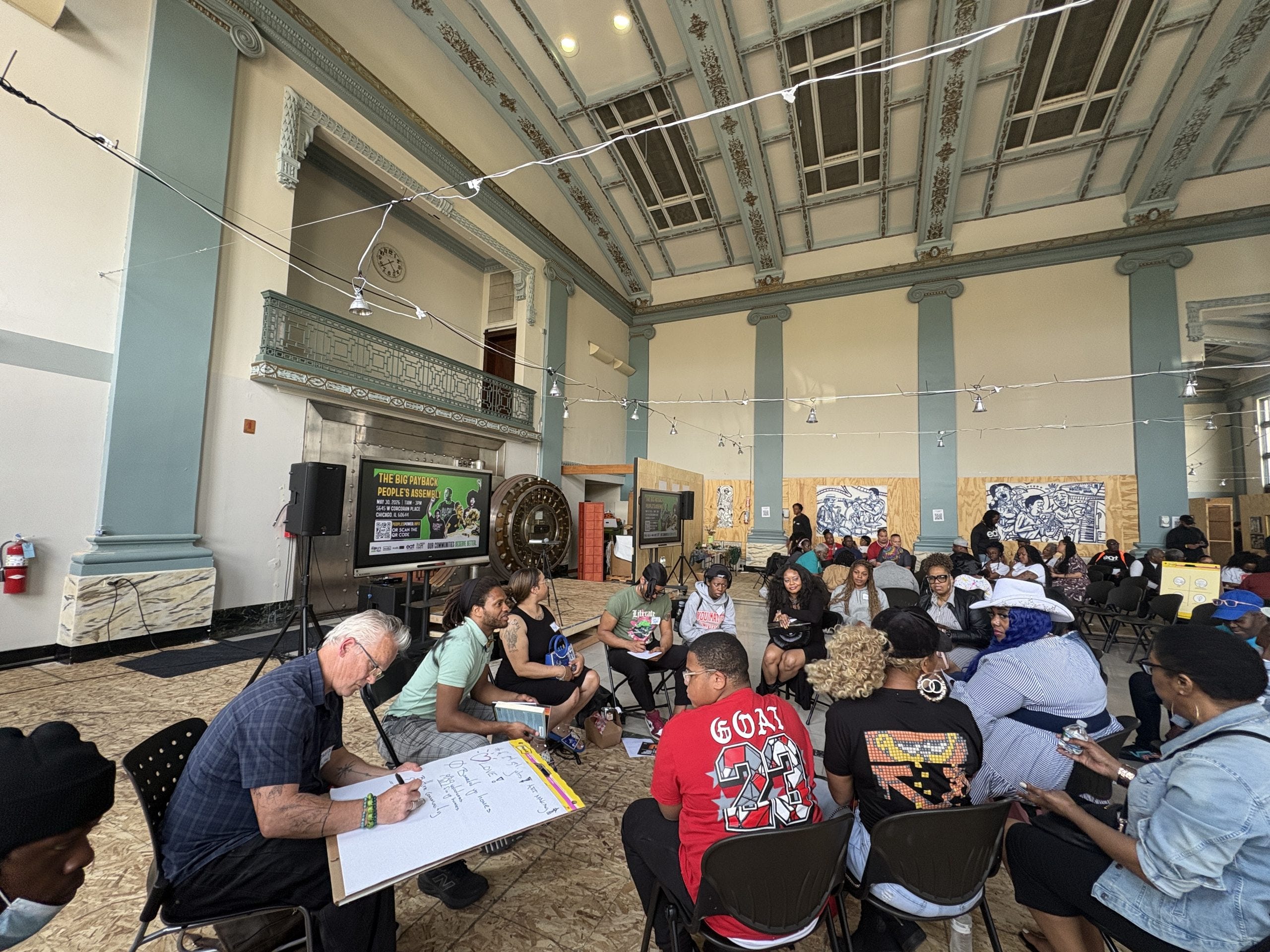
And the work is not only institutions filing reports. It is people in rooms, this year. On a Saturday at the end of May 2026, a few weeks before these words, Black residents of Chicago’s West Side gathered in a hall in the Austin neighborhood for a people’s assembly they called the Big Payback, convened by the organizing group Equity and Transformation and the Movement for Black Lives, to throw their weight behind a bill, Illinois House Bill 4443, that a state representative named La Shawn Ford had filed that winter: five hundred dollars a month, drawn from the state’s cannabis revenue, paid as local reparations into the neighborhoods Chicago spent a century disinvesting. A guaranteed income raised from marijuana taxes is not the lineage payment this argument is about, and one assembly in one neighborhood is not a national movement; I will not inflate it into one. But it is the oldest rung being climbed again in real time, organization and demand and testimony, by people who declined to wait for the country’s permission to begin. I will not oversell what all of this adds to. These are not the coordinated rungs of one national campaign climbing in order; they are scattered, uneven, some of them stalled, some already under attack, and no one has yet drawn the line that joins them into a single ascent. What they are not is nothing. The work has begun, in more rooms than the despair admits.
One rung is different, and it changes the direction of the whole climb. For the Japanese Americans, the courts were an ally at the decisive moment; the coram nobis cases exposed the government’s lie and helped force the apology. For slavery reparations the courts are, right now, the threat. The live litigation does not run toward recognition. It runs against the repair, on the ground that a benefit aimed by race or lineage cannot survive the Equal Protection Clause, and after the Supreme Court struck down race-conscious admissions in 2023 that argument has teeth it did not have before. Evanston’s program is being challenged on exactly those grounds, in a suit a federal judge refused to dismiss in early 2026, and the United States Department of Justice has now moved to join the case against the city. This is the legal risk Newsom named when he signed the study and vetoed the money, and he was not inventing it. It is the reason a reparation built the ordinary way, by a statute one majority passes, stands in real danger of being struck down by a court before it ever pays anyone. Which is not an argument against reparations. It is an argument about where reparations finally has to be built: not in a statute a court can reach, but in the Constitution itself, on the one ground in American law where the Equal Protection objection cannot follow it, because the repair would be written into the same document the objection is drawn from. The litigation rung does not stop the climb. It points it upward, toward a constitutional amendment, and tells the movement that ordinary legislation is a floor it will eventually have to leave.
The verdict is not the soft one, that reparations is merely not impossible. It is more than that, and also less than the word the argument would like to seize. The repair is achievable in the one sense a thing this large can be: that it lies within the country’s power and not beyond it. The standing the resentful withhold is not a fixed wall but a thing that gets built, and the country has built its like before, start to payment, inside a single lifetime, and the campaign for this repair has begun the same kind of work, the organizing, the commission bill, the first findings, the first checks. That is not proof it will be done. One redress is not a formula, and a scatter of beginnings is not a march. The scale is greater, the class vaster, the clock that hurried the last one gone, the courts now turned against it. What the precedent settles is smaller, and still fatal to the despair: that this is a buildable thing and not a fantasy, a road the country has walked once and could walk again, longer and harder, if it decides to. Achievable, then, not in the sense of likely or promised, but in the sense that takes away the excuse. It can fail for a hundred reasons, and it might. What it cannot honestly be called is foreclosed, the one repair the country has no power to make. What is missing is not a mechanism. It is the will to begin, and to keep on past the point where the feeling fades, and the years the building takes, and a coalition broad enough and durable enough to do the climbing without being burned down halfway up the way the last one was.
That last requirement is the one a serious man says cannot be met. He has watched coalitions form and shatter, he knows the arithmetic of a country that is most of it not Black, and he argues that the coalition this climb requires is precisely the coalition that cannot be assembled, that the attempt to pay this debt will break the very alliance any large repair depends on. He is the most formidable objection left standing, and if he is right the mechanism does not matter, because a ladder no coalition will climb leads nowhere. His name is Glenn Loury, and his is the case the next part has to meet at its full height.
Part VI
Glenn Loury is a Black economist at Brown, a one-time conservative who broke with the right, and not a figure the reparations debate can wave off as a reactionary. When he set himself against reparations again in the spring of 2023, he was careful to say which objection he was making. There is the right-wing case, he noted, the one that calls reparations unfair and racist, and he had made it before. This was not that. “I could give a left-wing objection, too,” he said, “which is that it sunders the working-class coalition that you need to get real reform; that the claims of historical racial victimization, while perhaps valid in terms of historical truth, are secondary to the imperatives of contemporary structural reform.” That objection cannot be brushed aside, because it is built out of devotion to the same end this argument wants, a decent society, and concludes that reparations is the thing standing in its way.
Loury asks you to picture a white working-class voter in a Rust Belt town hollowed out by deindustrialization and the opioids that came in behind it. That voter might well listen to a candidate promising a real safety net, higher taxes on the men who shipped his job overseas, the broad economic reforms that would actually reach his town. But let the same candidate also promise large cash payments to the man’s Black neighbors while handing him nothing, and the voter, Loury says, “might question how serious those calls to solidarity really are. As well he should.” The reforms that would save that town can only be won by a coalition that runs across every racial line, and a race-targeted cash transfer cuts against the only force capable of delivering them. He puts the hardest version in the bluntest words: “Blacks want to cut a side deal with America, so that the racial wealth gap will get narrowed instead of lending a hand to the generation’s-long project of creating a decent society for everybody. If you did the latter, the former would take care of itself.”
This is not a crank’s pose. Loury is voicing, in sharper language, an argument with a serious pedigree, one that runs back through William Julius Wilson, who made it a generation before him. In The Declining Significance of Race and then The Truly Disadvantaged, Wilson argued that for the Black poor, class had come to weigh as heavily as race, and that the policies most likely to lift them were the universal ones, because universal programs could command the broad coalitions that race-targeted programs never could. Target by race and you win the argument and lose the votes; target by universal need and you might win both. Loury’s case against reparations is Wilson’s case against race-targeting carried to its furthest edge.
It is right about more than its opponents admit. It is right that the multiracial working-class coalition is the most powerful instrument American politics has, and the rarest. It is right that a racial transfer offered as a side deal is poison to that coalition; the Rust Belt voter is Tesler’s spillover wearing work boots, and he is real. And it is right that a left which spends its scarce solidarity on a payment advertised as a payment to one group may find the solidarity gone when it needs it for everything else. If reparations were only what Loury describes, an identitarian side deal that asks the coalition to break itself on behalf of one of its parts, he would be right to reject it, and so would you.
But his case rests its whole weight on one clause, and the clause will not bear it. If you did the latter, the former would take care of itself. The racial wealth gap is not a stubborn pocket of ordinary poverty that a rising tide would lift. It is the measured residue of specific, named, racial theft: the homes Black families were refused under the federal lending maps, the GI Bill that built white suburbs while Black veterans were turned away at the bank, the savings the government gathered into the Freedmen’s Bank and let white trustees gamble into nothing. A guaranteed income paid to everyone does not return what was taken from some. It relieves poverty, which is good and necessary and a different act. To tell the descendants that their stolen inheritance will take care of itself inside a universal program is to make them, one more time, the people whose specific debt gets folded into a general kindness and then quietly never paid. The reforms Loury prefers do not discharge the debt. You can have both. You cannot have the second in place of the first and call the first paid.
That answers the moral half and leaves the hard half exactly where it stood. Loury can grant that universal reform does not discharge the debt and still press the thing that matters: that pursuing the debt now will consume the coalition before it wins anything, that the reparations fight is divisive enough to shatter the alliance every other repair depends on, that a movement has only so much solidarity to spend. To answer that I have to do the opposite of what an advocate is tempted to do, which is make the problem look smaller. The problem is large, and the true size of it is the only place a real answer can begin.
The route I am going to propose is not an ordinary bill, because the ordinary road is closing. The courts have made it perilous; after the Supreme Court struck down race-conscious admissions in 2023, a statute that pays by lineage stands in real danger of being struck down before it reaches anyone, which is the lawsuit now bearing down on Evanston. What is left, if the repair is to be durable, is a constitutional amendment, and an amendment is the steepest climb in the American system. Two-thirds of the states to convene a convention, or two-thirds of both houses of Congress to propose; three-quarters of the states, thirty-eight of them, to ratify; and only thirteen to block. On today’s numbers that is not a near thing. Support for cash reparations sits below forty percent. The best-organized drive to call a convention for any purpose has spent more than a decade reaching twenty of the thirty-four states it would need. A bloc of reliably opposed states could stop a racially divisive amendment cold tomorrow morning, and on the present alignment would. So let me say plainly what the constitutional route does to Loury’s objection. It does not soften it. It sharpens it. It does not lower the bar he set for the coalition; it raises it, and adds veto points he never named. If a simple national majority for reparations looks far off, a supermajority across three-quarters of the states looks further still.
Which raises the obvious question of why anyone would choose the hardest door in the building, and the answer is not the one an earlier turn of this argument reached for. It is tempting to say the ratification wall manufactures the coalition, that the threshold forces the alliance into being. It does not. A wall does not build the thing that climbs it. The coalition is built, if it is built at all, by the long work the last sections described, and the wall adds nothing to the building of it. What the wall does is two narrower things. It is the one kind of ground a hostile court cannot reach, because a repair written into the Constitution cannot be struck down as unconstitutional. And it makes what the coalition wins durable, settled where an ordinary majority cannot repeal it, which is the protection the Wilmington coalition never had when it held its power by lawful election and lost it anyway to a mob. The wall is not an engine of consensus. It is the price of permanence, and the one road left that a hostile court cannot close.
That still leaves Loury’s coalition unbuilt and the steepest possible bar in front of it. Here is the answer, with the account of what it does not do set beside what it does. Loury imagines reparations as a single divisive item the coalition must spend its whole strength to pass, alone, against everything else the coalition wants. It does not have to travel alone. A constitutional convention is not a single-issue vehicle; it is the one moment the country reopens its basic terms and asks what they should now be. The first pamphlet in this series argued for calling that convention for democratic renewal, to pry the captured channels open, to get the donors’ hands off the legislature and the gerrymander out of the map, the very reforms Loury wants for his Rust Belt town. Reparations can ride as one plank of that refounding rather than as a bill standing by itself. Now the part an advocate is tempted to skip. This does not abolish the competition Loury fears; it relocates it inside the package, where planks compete for money and attention and ratifying votes, and where a divisive plank can drag a popular one down as readily as a popular one can carry a divisive one up. I will not call reparations and democratic reform the same project; they are not. They share a description, a country mending the terms it got wrong, not an identity. What the bundle changes is the proposition the coalition is asked to weigh: from spend everything on the most divisive single item, to make the repair the moral center of a renewal broad enough that the people assembling for the whole have reason to carry it. Whether that wager pays I cannot prove. It is the coalition problem itself, moved onto better ground and not solved.
The danger is real and it is the mirror image of the hope, so I will not leave it unsaid. The same bundling that lets reparations ride is the bundling that could trade it away. In the horse-trading of a convention, the most divisive plank is the one most easily sacrificed to save the rest, and a movement that lets reparations become the bargaining chip will watch the descendants’ claim spent to buy somebody’s term limits or somebody’s balanced budget, the repair folded into the deal and then folded out of it. Bundling is leverage and exposure at once. Which is why the bundle is, in the end, as much a demand as an offer, and the single discipline the movement cannot relax is that the repair is the keystone and not the makeweight: it goes in as a fixed point, or the refounding becomes one more elegant machine for paying everyone except the people owed.
And the relationship can run the other way, which is the wager’s whole basis. A convention convened only to reform procedure, to redraw districts and rewrite campaign finance, is a technocrat’s errand, and no one ever bled for a technocrat’s errand. What turns a package of reforms into a renewal a people will rise for is a moral center, a wrong large enough that righting it means something, and the oldest and gravest debt the country owes is exactly such a center. Loury fears reparations will sink the coalition. It might, as easily, be the thing that summons it. I cannot tell you which, and neither can he. He treats that uncertainty as a verdict; I do not.
And I should be as plain about the route as I have tried to be about the wager. I have argued the convention at length because it is the most promising path I can find, and because the pamphlet before this one built the amendment that would travel it. But it is a way, not the way. The country may yet find a door I cannot see from here; a thing this large is reached by a road a movement discovers in the walking, not one an essayist draws in advance and hands down from a desk. So I will not claim more for this route than it can bear. What I am claiming is narrower and firmer than a map. It is that a way exists, that this is a plausible one, and that the destination lies within the country’s power to reach. The how is ours to find together. What this argument has spent itself to settle is the other thing: that the debt is owed, and that paying it is within the country’s power.
There is more in a convention than machinery, and the more is something this country has nearly forgotten it owns. We have sorted ourselves into two nations that share a map and a currency and a great deal of mutual contempt and little else. We treat each election as a war to be survived and the people across the line as an enemy to outlast until the next one. We have very nearly lost the plain civic act of sitting in a room with people unlike us and settling something together. A convention is the rare instrument in the constitutional order built to force that act back into being. It would seat delegates from the states in one room and hand them a task they can neither abandon nor win alone: to write something three-quarters of the country will agree to live under. You do not reach thirty-eight states by beating your opponents. You reach it only by finding, with them, the terms on which you can both stand. That is the table this divided house has refused to set, the meal it has refused to share, the decision it has refused to make as one people instead of two armed camps.
Which is why reparations belongs there, at the center and not the margin, as the test and not the exception. It is the hardest thing a convention could be asked to take up, the most bitterly contested item in the country’s whole ledger of unfinished business, and that is what makes it the proof. A people who could sit down at that table and decide, together, to pay the oldest debt they owe would not only have settled the debt. They would have shown that the table still works, that a country this fractured can still convene and still choose and still bind itself to a hard and common thing. And they would be doing, at last, what the country said it would do at the very beginning and has never once done. The first sentence of the national creed holds that all men are created equal. It was written by a man who owned the people it was written about, into a country that wrote their bondage into its founding law and, when the war finally came to settle it, began a second founding to make the creed true and then abandoned it half-built within a decade. The promise has been outstanding since 1776. The repair is what keeping it would finally look like, in money, where the country has always been most honest and least willing. To pay it is not to give the descendants something extra. It is to make the founding sentence true for the first time, and a country that made that sentence true would be, at last, the country it has only ever claimed to be.
We stand, this year, two hundred and fifty years from the founding, and we have sanded that founding down into a children’s story with the ending known in advance. Remember what it actually cost and how unlikely it actually was. A scatter of indebted, quarreling, half-bankrupt colonies, with no real army and no precedent anywhere on earth that the thing could even be done, declared themselves a nation, lost much of a generation to win it, watched their first government begin to come apart within a few years, and then sat down in a hot shut room in Philadelphia and argued their way through a summer to a constitution. They did it under conditions worse than ours, with far less in hand and far more to fear. What stands in our way is real, the numbers and the courts and the sorting and the fear, and none of it is nothing. But none of it is a law of nature either. It is the work undone, and the work undone is not the same as the work that cannot be done.
So the most serious objection has its answer, and the answer does not pretend to be complete. The coalition is not conjured by the machinery; it is built the long way and then bound into a refounding broad enough to carry both the debt and the democracy that have waited together this long, and whether it can be built remains the open question the will exists to settle. One thing is still owed the reader before we turn to the will, and it is the plainest question about the one route I have proposed. Is the vehicle even real? Is an Article V convention a workable instrument, or a fantasy that blows up in the country’s hands the moment it is tried?
Part VII
The vehicle I have proposed is worth inspecting before anyone is asked to spend a life building a will toward it. Article V gives two roads to an amendment. The familiar one runs through Congress, which proposes by two-thirds of both houses and sends the result out. The other runs around Congress: when two-thirds of the states, thirty-four of them, apply for a convention to propose amendments, Congress must call one. Either way, whatever is proposed becomes law only when three-quarters of the states ratify, and Congress decides whether that ratification runs through the state legislatures or through special conventions called for the purpose. The prior pamphlet wrote the amendment itself, its text and its triggers and the mechanics of who is owed and how the debt is paid. This one does not redraft it. The question here is only this: whether the instrument that would carry such an amendment is one a serious movement can use, or a trap.
It can sometimes do its work without ever being switched on, though the precedent for that is more limited than its enthusiasts claim. Early in the last century, when the Senate had refused for a generation to let the people elect it directly, reformers stopped petitioning the Senate and began petitioning the states for a convention. The applications piled up toward the threshold that would tear the matter out of the Senate’s hands, and in 1912 the Senate proposed the Seventeenth Amendment itself, and direct election was ratified the next year. No convention was ever held. But look at the condition that made the threat work. By the time it bit, direct election had already been adopted in practice across most of the country, through state primaries and binding party pledges that left senators chosen by the voters in all but name. The convention pressure was the last shove on a door most of the country was already leaning against. That is a real tool, and it is a late one. It works when a reform is most of the way to consensus and needs the final push. Reparations is nowhere near that point, which means the threat-model is something this campaign might reach for at the end of its road and not the beginning. To claim it now would be to claim a shortcut the conditions do not support.
The serious fear about the other road, the one that ends in an actual convention, is that it runs away: open the Constitution in a country this inflamed and a convention might propose anything, and the anything could be monstrous. The fear is reasonable, and part of the answer is bolted into the machine. A convention can propose; it cannot enact. Whatever it sends out, however wild, still has to go before the states and win three-quarters of them, and nothing wins thirty-eight states that is not already the settled conviction of a broad national supermajority. The threshold that makes reparations hard is the same threshold that keeps a runaway from becoming law. But that is only part of the answer, and I will not pretend it is the whole of it. A convention could be captured by the best-organized faction, could turn into a circus, could poison the country’s mood or shake its markets even if nothing it proposed were ever ratified. The ratification wall stops a bad amendment from becoming law. It does not stop a bad convention from doing damage on the way to losing. Anyone who tells you the thing is perfectly safe is selling it. What can honestly be said is more modest: the single worst fear, a runaway body rewriting the Constitution by its own fiat, the machine forbids outright.
And the route is not a museum piece. The same Convention of States drive whose twenty states the arithmetic just counted against us cuts the other way on this question: it shows the Article V convention is a live political instrument and not a dead clause. Conservatives have spent more than a decade and real money driving it, and state legislatures take it seriously enough to keep passing applications. They may never reach thirty-four. But a vehicle that twenty legislatures are actively trying to start is a working machine, whatever finally becomes of it.
So here is the honest sum of the vehicle. It is real; the Constitution provides it. It is untested; no amending convention has ever been held, and hard questions about how one would be called, staffed, and bounded remain unsettled, so anyone who calls the machine proven is guessing. It is safer than its reputation in the way that matters most, that it cannot impose anything the country has not ratified, and more dangerous than its boosters admit in the ways just named. And on today’s numbers it is nowhere near reachable. That is a great deal of hedging, and it still leaves standing the one thing this part had to establish. At least one plausible constitutional route to the repair exists. Not a guaranteed route. Not certainly the right one. One. And the existence of even one is enough to break the thing the despair is built on, which is the belief that there is no road at all. There is a road. Whether it is this road, or some door not yet visible from here, is the kind of question a movement settles by walking, not the kind a pamphlet settles by writing. What no argument can supply, and what everything now waits on, is the will to start.
Part VIII
The will runs into one last barrier, the heaviest of all because it does not argue. It surrenders. A person can grant the whole case, the debt and the form and the story and the standing and the route, and still set it down with a small tired shake of the head and the oldest word in American politics. Impossible. Not wrong. Impossible. It will never happen, not here, not in this country, not in any span of years worth planning around. The word feels like wisdom. It is the sound a serious person makes. And it is the most complete refusal there is, because it does not dispute the repair, it declares the door welded shut and walks away, and in walking away it helps weld the door.
Look hard at the record of that word, because the record is instructive and it does not say what either side wants it to. Consider who has spoken it. In March of 1850 Daniel Webster, the most respected statesman of his age, rose in the Senate and told the country that the men agitating to end slavery were fanatics endangering the Union, that their crusade had produced nothing good or valuable, and that wisdom lay in compromising with the institution and keeping the peace. He was not a fool and he was not alone; he was the consensus speaking in its most learned voice. Fifteen years later slavery was gone from the Constitution. A federal amendment for women’s suffrage was introduced and ignored or voted down in Congress for forty-two years, and the settled wisdom held that the federal route was closed and only the slow state grind remained, until in the space of eighteen months it passed both houses. The Senate filibuster was understood by everyone who counted votes for a living to be a permanent wall against civil rights law; in the forty-seven years before 1964 the Senate broke a filibuster five times and never once on a civil rights bill, and the people whose job was to know wrote that cloture on such a bill was simply not possible. On June 10, 1964, the Senate invoked it, seventy-one to twenty-nine. In each case the people who pronounced the thing impossible were informed, reasonable, and sincere, and in each case they were wrong at the exact moment it mattered.
But I am not going to hand you the comfortable version of that pattern, where the arc bends and the good thing always arrives, because the country’s own history refuses it. The same Reconstruction that wrote three amendments and a second founding into the Constitution was declared secure by reasonable people, and then it was destroyed, and the destruction held for the better part of a century. The Wilmington coalition was real and then it was murdered. The gains of the civil rights years are being narrowed now, in our time, by a Court that was told its predecessors’ work was settled. So the lesson of learned impossibility is not that impossibility is always a lie. It is smaller and grimmer than that. The confident certainty that a thing cannot happen is not knowledge; it is a forecast, and the forecast of impossibility has been wrong at enough of the hinges, and right for long enough between them, that the only foolish thing is to treat it as settled fact. Impossible is a prediction, not a verdict, however much it dresses like one.
The darkest place that prediction was ever spoken is the one this argument cannot go around. On the second of December, 1859, a man named John Brown was walked to a Virginia gallows, and on the way he handed a guard a note. “I, John Brown,” it read, “am now quite certain that the crimes of this guilty land will never be purged away but with blood.” Respectable opinion filed him under madness. His prophecy that it would come to blood was vindicated within sixteen months, when the war he foresaw began; the end of slavery itself took five more years and that same war to arrive. I am not holding Brown up as a model, and this argument does not want his rifle. What is worth seeing in him is harder and stranger than either the legend or the slander. Brown did not lack a peaceful instrument because none had been written; the Constitution’s amendment process had existed since 1787. He lacked it because it could not be used. Ending slavery by amendment required three-quarters of the states, and half the states were slave states that would ratify the end of slavery never. The peaceful door existed and was barred from his side by the very power he was trying to break. He had no reachable route, and so he reached for the rifle, which was the tragedy of the man and not his glory, and the war he foretold came, and it killed Americans by the hundreds of thousands and tore slavery out by the root.
The door Brown could not open is the same door the Thirteenth Amendment finally walked through. Once the war broke the slave power’s grip on the states, the amendment process that had been useless against slavery in 1859 became the instrument that abolished it in 1865. The route was never the problem. The lock on it was. And the difference between Brown’s lock and ours is the difference this argument turns on. Brown’s lock was the slave power itself, fifteen states that would defend slavery to the death and could be taken off the door only by being taken out of the Union, which is to say only by war. Our lock is a political alignment, the bloc of states that would refuse the repair today. That is a real lock, and the arithmetic already refused to pretend it is not there. But a political alignment is the one kind of lock that opens without a war, slowly, as minds change and the makeup of the states that hold it shut changes with them. So I will not tell you the door stands open; it does not. I will tell you the door is locked and not welded, and that the lock is the kind a generation can pick. Brown’s door was welded, and it took a war to cut it down. Ours is merely locked, by a hand that politics can still reach.
Hold the mirror up to the country, then, and look at the face in it. The nation calls itself the one where all are created equal, and points to the creed as if the pointing were the keeping. But the creed has never been kept, not for the people this debt is owed to, and the proof is in the ledger no amount of self-congratulation erases. This is the face of the republic with its original sin still on it, unconfessed and unpaid, and no monument and no anthem and no recitation of the better angels will powder it over. The wound does not close on its own. Left unanswered it does what unanswered wounds do, it festers, it poisons the blood around it, it turns every argument the country tries to have about race into a fight it cannot finish because the thing underneath was never settled. A country can die of a wound it will not treat. This one does not have to. That is the entire wager of this argument, that the festering is a choice and the healing is a choice, and that the choice is still ours to make.
And the will to make it is not something we wait on like weather. It is already being built, unevenly, in places worth naming. It is being built by time, because the young are not where their grandparents stood, not close, and the consensus that holds the debt unpayable does not get to vote forever. It is being built, where it is led, by people willing to stand in front of a hostile public and tell it the truth before it is ready to hear it; Konrad Adenauer led West Germany to pay reparations to the survivors of the Holocaust over the doubts of much of his own public, many of whom told pollsters the payments were unnecessary, and over the opposition of half his own party, whose votes he did not need because the opposition supplied them. None of which makes the outcome sure. The young grow more willing and a backlash thins the margin again. The leaders who would lead are rare and the rooms are always hostile. The will is not a tide that comes in whether anyone wades out into it. It is the opposite of a tide. It exists only to the degree that people decide, on purpose, to build it, and it stops the moment they stop.
Which is the one piece of news in all of this that should make the size of the thing feel survivable instead of crushing. No one alive knows the whole road from here to the paid debt, and that is not a reason to stand still; it is the reason to start walking, because a road this long is found only in the walking of it. And a will does not get built in a single heroic stroke, by one march or one law or one election that turns the country over at once. Nothing that was ever hard got done that way. It gets built the way people get free of the things that are killing them, not all at once and not by the force of one grand resolution, but today, and then again tomorrow, and the day after that, by somebody choosing the next real thing in front of them and choosing it again when the feeling has worn off. The next real thing is rarely a mystery. It is an argument made at the table instead of swallowed. A vote cast for the candidate willing to say the word out loud. A dollar and an hour to the people already doing the work, to the descendant organizations that have carried this for decades, to the legal defense of the cash programs the courts are now trying to kill, to the thirty-six-year-old bill for a federal commission that has never once reached a vote. A state study pushed the last hard inch from a report into a payment. A child raised to find obvious what its grandparents found unthinkable, which is the quietest and most powerful act of all, because raising the young to take for granted what their elders called impossible is how the impossible has always, finally, been done. You do not have to carry the whole debt, or map the whole road. You have to carry your part of the will, today, and trust the person beside you to carry theirs.
What you have to refuse, and refuse on purpose every time it speaks, is the counsel of impossibility. You will hear it constantly, and it will sound wise, and it will almost always come from someone with nothing at stake in being wrong. It will recite the numbers, which are real. It will recite every reparations bill that died in committee, which is accurate. It will tell you gently that you are naive, the way the governor said much more than cash payments, the way Webster called the abolitionists fanatics, the way every serious man has said impossible the morning before the impossible was done. Learn the voice for what it is. It is not a prophet reading the future. It is a guard standing in front of a door that is locked but not welded, and the only extra power it holds is the power you hand it by believing the lock can never be turned. The lock can be turned. The door was not cut by men who foresaw this particular day; they could not have. It was cut by men who knew they were leaving the work unfinished, and who built into the same document that held their failure a way for a later and braver generation to mend what they could not. They left the means of repair lying beside the injury, the door and the key to its lock both, and both have come down to us together, and the lock has held all this time mostly because we agreed among ourselves not to try the key.
So carry the sentence this has all been for, and carry it not as a claim to be defended but as a charge to be kept. The repair is for the descendants of the enslaved; the country it produces is for everyone. That is no slogan and no consolation. It names a country that does not exist yet and could, a country that has finally paid the thing it owes and is therefore finally free of the lie it has had to tell itself for two and a half centuries to keep from paying, a country every one of us and every one of our children would get to live inside. The descendants are owed the payment. Everyone is owed the country.
The first of these reparations arguments said the debt is not unpayable; it is unpaid. This last one says the other half. The repair is not impossible; it is unbuilt. And unbuilt is the exact word, and not a comfortable one, not finished and not even close, but no longer a mystery either, because the early work is known and the first hands are already at it, even if the whole of the road is not yet mapped. The distance between unpayable and unpaid, between impossible and unbuilt, is the distance between a fact you are required to accept and a job you have not yet done. A fact closes the matter. A job waits for hands. This is a job, and it has been waiting a hundred and sixty years for enough hands to decide, together, to do it.
We are standing in the two hundred and fiftieth year. The generation that made this country handed the ones who followed an unfinished thing, a republic with a theft at its foundation it could not bring itself to repay, and, lying right beside the debt, the means to repay it, the door cut in the wall against the day a braver generation would walk through. Both have come down to us together, the debt and the door, the failure and the instrument of its mending, and they have sat in front of us our whole lives. The next two hundred and fifty years will know one thing about us that we do not get to revise. They will know whether we were the generation that stood at the door the others had left us, the debt compounding behind us and the country waiting on the other side, and at last, after all the long centuries of insisting it could not be done, decided to build the will, turned the lock, and walked through.