The Lever and the Load
The Conservative Case for Reparations

Part I — The Conservative Case at Full Strength
January 11, 2002. Thomas Sowell sits at his desk and writes a column.
It will run that week in Jewish World Review and through Creators Syndicate into newspapers across the country. The title will be “The Reparations Fraud.” The Coates essay that will become the canonical contemporary statement of the affirmative case is still twelve years away. In 2002 the reparations argument has minor American visibility outside academic and activist circles. The column will be received as one more dispatch from a respected conservative on a question that, the column will argue, the country need not take seriously.
The column’s central passage is this one:
“The fatal mistake made by those who imagine that they can appease movements and organizations with concessions is that concessions are incidental trophies for those who receive them, but unmet grievances are fundamental to their continued viability.”
Thomas Sowell, senior fellow at the Hoover Institution at Stanford since 1980, is by 2002 one of the most respected conservative intellectuals writing on race in the United States. He has published Race and Economics, Knowledge and Decisions, A Conflict of Visions, The Vision of the Anointed. He has written for over twenty years on questions of race and economic policy. The column will run that week and be picked up across the country. It will be cited in classrooms and opinion pages for the next two decades. The diagnostic passage will become a touchstone for the conservative position on reparations.
The argument the column makes is structural. The moral argument against reparations (that descendants should not be paid for what was done to their ancestors, that present-day people should not be made to pay for what their ancestors did) is the argument Sowell makes elsewhere and that other conservatives have been making since the demand was first articulated. The column’s force is in declining to rest there. The column argues that reparations advocacy is structurally designed never to succeed because succeeding would dissolve the movement that depends on it. The demand is the engine, and the engine has to keep running. Settlement of the demand would mean the engine stops. Therefore the demand will be made forever regardless of what is granted. The fatal mistake of concession is that it gives the movement what it least wants, which is closure.
Sowell adds a second move.
“Seen in this light, the demand for reparations may seem like an exercise in futility. However, seen as a source of a lasting unmet grievance, it is a stroke of genius to keep blacks separated from other Americans and an aggrieved constituency to support black ‘leaders’ in politics, organizations and movements.”
The reframe is the column’s defining gesture. What looks like futility, Sowell argues, is design. The movement does not want to be paid. The movement wants to remain a movement. The leaders the movement supports require the demand because the demand is what makes them leaders. Therefore reparations are not a serious policy proposal. They are a political mobilization device dressed as a debt claim, and the country should treat them as such.
The argument is sharp. It is sharp because it is self-sealing: every renewal of advocacy is rewritten as evidence of the diagnosis. It is sharp because it relieves the country of the moral obligation by treating the demand as illegitimate at the foundational level. And it is sharp because it works on conservative premises a conservative audience already holds. The country owes nothing. The movement does not want what it claims to want. The leaders are running a long-term mobilization scheme. The honest position is to refuse engagement and let the demand expire on its own internal contradictions.
The years that follow change the documentary record.
In June 2014, Ta-Nehisi Coates publishes “The Case for Reparations” in The Atlantic. The piece runs sixteen thousand words. It is the most-discussed magazine essay of the year and the canonical contemporary statement of the affirmative argument. In February 2020, William A. Darity Jr. and A. Kirsten Mullen publish From Here to Equality. The book establishes the methodology for calculating the reparations debt at twelve to fourteen trillion dollars, the eligibility criterion (lineage from American chattel slavery), and the implementation framework (acknowledgment, redress, closure). In March 2021, the city of Evanston, Illinois, becomes the first American municipality to enact a direct reparations program, paying twenty-five thousand dollars per eligible Black resident toward housing. In June 2023, the California Reparations Task Force releases its final report. In March 2026, the United Nations General Assembly votes to declare the transatlantic slave trade a crime against humanity, over the objection of the United States. On Memorial Day 2026, Pope Leo XIV releases the encyclical Magnifica Humanitas, apologizing for the role of the papacy in legitimizing the transatlantic slave trade.
The reparations argument, between 2002 and 2026, moves from minor academic and activist visibility to a sustained presence in mainstream American policy debate, with documented economic methodology, a defended eligibility criterion, an enacted municipal program, a state-level task force report, an international declaratory resolution, and an apology from the global Catholic Church.
The Sowell column, between 2002 and 2026, remains the operative conservative case.

The 2014 Coates piece does not take it on directly. The 2020 Darity-Mullen book proceeds around it. The Evanston program faces a federal lawsuit, Flinn v. City of Evanston, filed in May 2024 by non-Black plaintiffs arguing that the Supreme Court’s 2023 ruling against race-conscious college admissions rules out Evanston’s payments as well. Sowell’s structural objection has become the legal one. The California Task Force report sits in the state legislature with no implementing law behind it, and the federal record is worse: the one bill that would so much as study the question cannot reach a vote, and the executive orders of 2025 have rolled back even the modest measures that were on the books. The political opposition to reparations is making the same argument it has been making for twenty-four years. Sowell’s terms are still its terms.
What has changed, between 2002 and 2026, is the documentary record. Richard Rothstein on the FHA. Ira Katznelson on GI Bill exclusions. Mehrsa Baradaran on the banking architecture and the wealth gap. Walter Johnson on the regional geography of extraction. Anthea Butler and Robert P. Jones on the institutional theological architecture of American slavery. The Southern Baptist Convention’s 1995 apology for the role of slavery in its founding. The Holy See’s 2026 apology for the role of the fifteenth-century papal bulls in legitimizing the slave trade. The country owed something. The institutional Christian bodies that legitimized the slave economy owed something. The federal-program exclusions that built the white American middle class through the GI Bill and FHA architecture owed something. And the Thirteenth Amendment exception clause continues to extract eighteen to twenty billion dollars annually from over one million incarcerated workers, adding to the bill in real time while the country declines to pay it.
What has not changed is the conservative response.
The 2002 argument is still made in 2026. It is the argument that slavery ended long enough ago to be morally inaccessible to the present. It is the argument that descendants are not their ancestors, that no one alive today owned a slave, that no one alive today was enslaved, that any transfer of wealth would be between strangers. The documentary record refutes the timing premise. Emancipation was a hundred and sixty years ago. The Civil Rights Act was passed sixty-two years ago. Fair Housing was passed fifty-eight years ago. The FHA underwriting practices that produced the racial wealth gap operated through 1968 and their accumulated effect is the wealth gap of 2026. The prison-labor extraction continues in 2026. The harm is not a distant historical event. The harm is operating now. The argument that the country is too far from the harm to be responsible for it is not corrected by the record because it does not engage the record.
A second conservative argument has joined the first. This one accepts a substantial portion of the moral case and turns to the question of payment. We cannot pay this. The country cannot afford this. The administration is impossible. The political coalition will not bear it. The legal architecture will not survive Students for Fair Admissions. The Three-Fifths Clause and the slave-trade clause and the Fugitive Slave Clause are textual artifacts; the wealth gap they produced is operational reality; the bill is too large; the mechanism does not exist; the political wilderness is too deep. This is the argument that gets made by Glenn Loury and John McWhorter, by the Cato Institute and the Heritage Foundation, by the Wall Street Journal editorial page on most weeks.
Both arguments are in the field in 2026. The first refuses the documentary record. The second concedes the record and refuses the bill. Both arrive at the same place: the country does not pay.
The first argument was the work of the prior pamphlet in this series, The American Debt. That piece assembled the record clause by clause and named the institutional debtors. The record is on the page.
The fight is over the bill.
How do we pay?
Part II — The Macro Case: The Country Can Afford This
The affordability objection arrives with the weight of gut sense. $700 billion per year for twenty years. $14 trillion over the program’s life. The numbers sound like fantasy. The federal budget runs at $6.7 trillion in fiscal year 2026, the national debt sits above $36 trillion, and interest payments on the debt alone surpassed $1 trillion in fiscal year 2025 for the first time in American history. Adding $700 billion per year on top of that existing structure feels, to any honest reader, like asking the country to do something it cannot do.
The gut sense is wrong, and the case has been on the page for six years.
Citigroup published Closing the Racial Inequality Gaps in September 2020. The report’s headline finding: if four key racial gaps for Black Americans (wages, education, housing, and small-business credit) had been closed twenty years ago, $16 trillion would have been added to the United States economy. Sixteen trillion dollars. The size of the country’s current operating loss from the wealth gap. Economic activity that did not happen because the gaps did not close.
The largest single channel in Citigroup’s accounting is business-revenue. Providing fair and equitable lending to Black entrepreneurs over the last twenty years would have generated about $13 trillion in additional business revenue and 6.1 million additional jobs per year. The $13 trillion is roughly equivalent to a full year of China’s GDP. The 6.1 million jobs per year is approximately the entire population of Maryland, every year, for twenty years, not employed, not paying taxes, not buying goods, not building wealth, because the businesses they would have worked in were never capitalized, because the credit was never extended, because the wealth gap that the program is designed to close was operating.
McKinsey reached parallel conclusions in 2019. Closing the racial wealth gap could add up to $1.5 trillion to United States GDP by 2028, representing 4 to 6 percent of annual GDP. The 2021 McKinsey follow-up itemized the current annual costs. A $220 billion annual wage disparity: the amount by which Black workers are underpaid relative to comparably situated white workers each year. A $1.6 trillion annual business-revenue gap: the cost of Black-owned firms not existing or operating undercapitalized. A $330 billion annual disparity in the flow of new wealth, sixty percent of which comes from inheritances. Roughly $200 billion per year is not being passed down to the next generation because the wealth was never accumulated in the generation before.
These are not advocacy figures from a progressive think tank. Citigroup is a global investment bank that does not have an editorial reason to make this case. McKinsey is the consulting firm corporate America hires to model its own performance. The case is being made by the institutions whose business is calculating where money actually goes.
The hidden cost matters because it changes the calculation of the program’s price. The wealth gap is already costing the country $16 trillion every two decades. That is the loss the program would convert into recovery. The country is paying the bill either way. The only choice is whether the payment goes toward direct repair or remains as forgone growth.
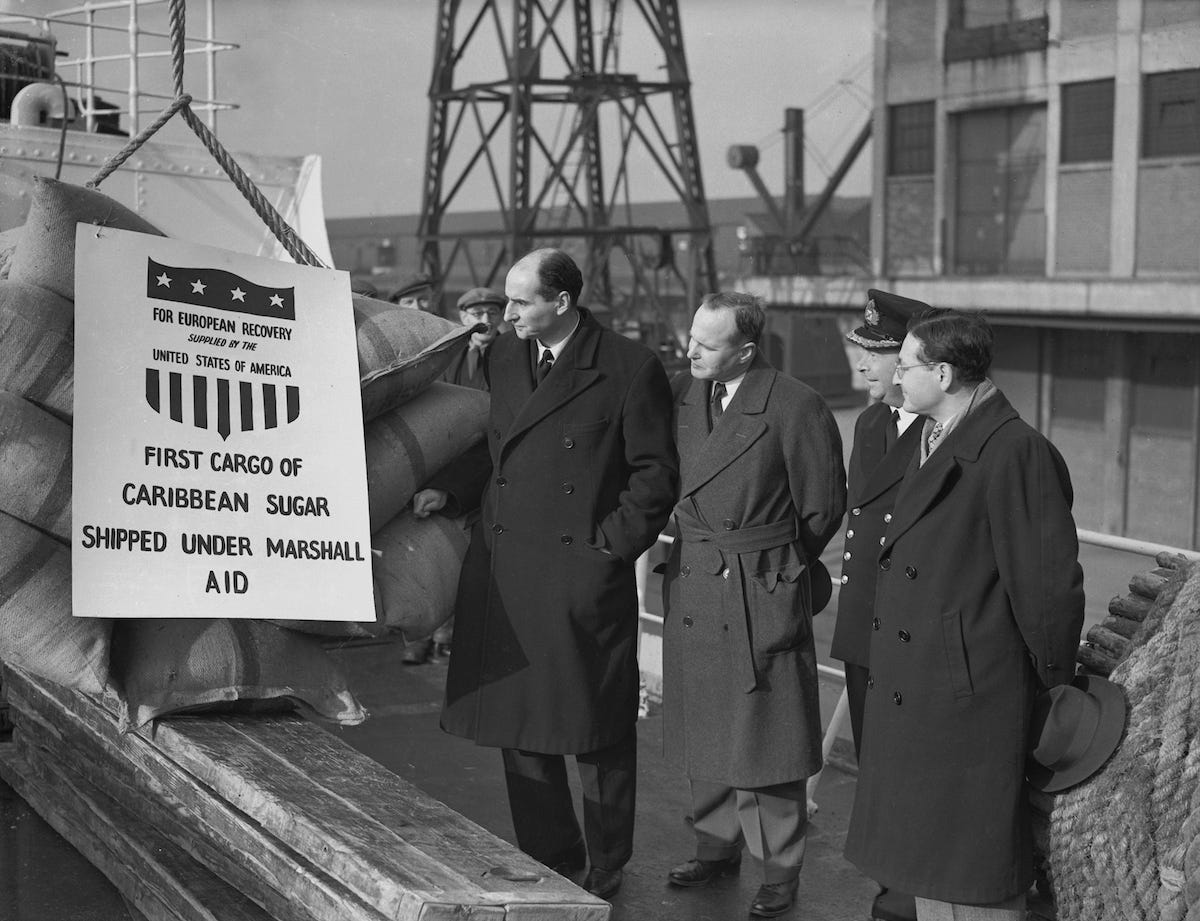
The scale of the proposed program is within the range of what the country has done before. The Darity-Mullen schedule runs at about $700 billion per year for twenty years, or roughly 2.4 percent of GDP. The Marshall Plan ran at about 5.2 percent of GDP at its 1948 peak and at roughly 1.1 percent averaged across 1948 to 1951. The proposed reparations program would run at the lower end of the Marshall Plan range, sustained over twenty years rather than four.
The Marshall Plan reconstructed Western Europe after the Second World War with an outlay that, in proportional terms, was larger than what the reparations program proposes. The economy did not collapse. The political consensus held across two administrations of different parties. The plan is widely remembered as one of the most successful American policy commitments of the twentieth century. The objection that the country cannot afford a $700-billion-per-year sustained federal commitment is the objection that the country cannot do something it has demonstrably done before, at a larger scale, with widely celebrated results.
The federal budget comparison sits the program in known territory. Department of Defense, fiscal year 2026: $886 billion, or about 13 percent of total federal outlays. Social Security: $1.4 trillion, about 21 percent. Medicare and Medicaid combined: $1.5 trillion, about 22 percent. Reparations at $700 billion would be about 10 percent of total federal outlays during the twenty-year period of the program. The country has been funding line items at this scale for the entirety of the postwar era. The reparations program would be the smallest of the four major federal commitments and would terminate, by design, after twenty years. Defense, Social Security, Medicare, and Medicaid have no termination clauses.
The fiscal arithmetic is what decides the question.
The reparations program is deficit-financed, in the same way the country has financed every major wealth-building commitment since the New Deal. The federal Treasury issues bonds, the country borrows from itself and from international investors at the prevailing rate, and the cost of borrowing is added to the federal debt. The first-year debt service runs at about $20 to $30 billion, rising over time as the principal accumulates. The country borrows now against future tax revenue, which is what the country has done for every other major federal commitment in living memory.
What that borrowing buys has to be stated carefully, because the temptation is to overstate it.
Citigroup projected that closing the four gaps today would add about $5 trillion to national output over five years. McKinsey put the gain from closing the racial wealth gap at up to $1.5 trillion in annual output by 2028. At a federal revenue take of seventeen to eighteen percent of GDP, output gains on that order would return something between $170 and $270 billion a year to the Treasury, against a first-year debt service of $20 to $30 billion. The feedback is large.
It is worth being clear about what that feedback is and is not. Those models price the gain from closing the gaps through wages, education, housing, and business credit. A cash transfer is a route to that closure, not the same thing as it, and the output it unlocks arrives over years, not on the schedule the payments go out. The revenue it returns is real, and large enough that the program’s net cost to the Treasury is a fraction of its gross outlay. It cannot be booked dollar for dollar against the borrowing, as though every modeled dollar of GDP came back to the Treasury clean and on time. The case does not need that claim, and it is stronger without it.
The claim it does need is the one the affordability objection never answers. The objection counts the cost of payment and ignores the cost of nonpayment. The wealth gap is already a standing loss, on the order of the figures Citigroup and McKinsey put to it, carried year after year as output that does not happen, businesses that are never capitalized, wealth that is never built and never passed down. The country is paying that bill now, in forgone growth, and it will keep paying it for as long as the gap stands. The choice the objection refuses to see is not between spending and thrift. It is between spending to close the gap and continuing to absorb the cost of leaving it open.
That cost also lands directly in the federal budget, in the line items the gap inflates. Mass incarceration cost the United States approximately $182 billion in 2025, according to the Prison Policy Initiative’s Whole Pie 2025 report. Black Americans are incarcerated in state prisons at nearly five times the rate of white Americans, and one in 81 Black adults is currently serving time in state prison. The pathway from the wealth gap to that disparity runs through neighborhood disinvestment, school resourcing, and labor-market access, and a reduction in the disparity that tracks the closing of the gap takes real money off the system-wide bill, more once the downstream costs of courts, lost tax base, and family disruption are counted.
Uncompensated care cost American hospitals about $42.7 billion in 2020, according to the American Hospital Association, a burden currently funded through Medicare and Medicaid disproportionate-share-hospital payments and cost-shifted onto private insurance premiums. Moving the uninsured toward coverage as the gap closes reduces that burden too.
None of this is booked as a clean profit on the program, and it does not need to be. The honest accounting is the more modest one, and it is harder to refute. The program can be financed the way the country has financed every major commitment since the New Deal. Its net cost, after the revenue the growth returns and the status-quo costs it retires, runs well below its gross outlay. And the alternative to bearing that net cost is not keeping the money. It is continuing to pay, indefinitely, the larger cost of the gap the program would close.
The affordability objection has to find another ground.
The stronger form of the conservative economic argument is that the country should not pay this on conservative grounds, regardless of what it costs. The stronger form lives in the conservative economic frameworks themselves, the ones the named conservative critics work inside of. The next question is what those frameworks actually require.
Part III — The Micro Case: Conservative Frameworks Require Cash
The case against reparations does not finally rest on cost. Its most serious version grants that the country could pay and argues that it should not, that a transfer of this kind would be unjust in principle, regardless of what the arithmetic shows. That argument has to be met on its own ground, which is the body of frameworks the conservative critics work inside.
Sowell, Loury, and Williams do not present themselves as fiscal hawks who would support reparations if the math worked. They present themselves as principled adherents to a tradition of economic thought with positions on property, on government failure, on the relative virtues of cash and bureaucratic administration. That tradition has clear answers to what is owed when government action distorts a market and produces injustice. What those answers require, applied to the actual American record, is the question.
They require cash, and they require it without much ambiguity.
Robert Nozick is the philosophical anchor of the late-twentieth-century libertarian and conservative-economic tradition. His Anarchy, State, and Utopia, published in 1974, is the most influential book of libertarian political theory of the last fifty years. Nozick’s argument is that legitimate property holdings derive from a “historical entitlement” rather than from any pattern of distribution. The state has no right to redistribute wealth in service of a vision of how wealth ought to be distributed. The state’s only legitimate role with respect to property is to enforce the rules of just acquisition and just transfer.
Nozick’s entitlement theory has three principles. The first is justice in acquisition: a person who acquires a holding in accordance with the rules of just acquisition is entitled to that holding. The second is justice in transfer: a person who acquires a holding in accordance with the rules of just transfer is entitled to that holding. The third is the principle the conservative critics of reparations less often discuss. It is justice in rectification.
Nozick: “If past injustice has shaped present holdings in various ways, some identifiable and some not, what now, if anything, ought to be done to rectify these injustices?” He poses the question and his theory answers it. Injustices in the chain of acquisition must be rectified. The state’s legitimate role does not stop at preventing future injustice. Rather, it includes correcting holdings whose origins were unjust. Nozick is explicit. The patterned principles of distributive justice that he otherwise rejects are best understood, in his view, as “rough rules of thumb meant to approximate the general results of applying the principle of rectification of injustice.”
American chattel slavery is the textbook case of unjust acquisition. The wealth slaveholders accumulated through enslaved labor was, by any honest reading of Nozick, unjustly acquired. The wealth was transferred down through inheritance and through institutional structures whose chain of legitimacy depends on the legitimacy of the original acquisition. The federal-program exclusions from the FHA and the GI Bill were textbook cases of unjust state action that produced distortions in the chain of holdings whose effects persist into the present. The Nozickian framework, applied to the American record, mandates rectification. The conservative reader who invokes Nozick to argue against redistribution is invoking the very framework that, on this record, demands repair.
The Lockean foundation runs even deeper. John Locke’s Two Treatises of Government, published in 1689, supplies the foundational theory of property in the Anglo-American tradition. Locke’s argument is that property comes into being when a person mixes their labor with previously unowned material. The person who clears the land, plants the crop, builds the house, has mixed their labor with the land and the materials, and the property in the result belongs to them by virtue of that labor.
Slavery is the structural negation of Locke’s theory. The enslaved person mixed their labor with the land, planted the crop, built the house, and the property went to the person who claimed ownership of the laborer. Locke’s framework, applied to the slave economy, produces the answer that the wealth was stolen. The labor was mixed. The property did not flow to the mixer. The chain of acquisition was unjust at the original step.
The conservative reader who invokes Lockean property rights as the foundation of American economic freedom is invoking a framework that, applied honestly to the slave economy, demands restitution of the stolen property. The framework offers no escape route through the passage of time. It offers no escape route through the death of the original parties. It is about labor and property and the chain that connects them. The chain was broken at the origin and has not been repaired.
The conservative economic tradition’s defining commitment, beyond Nozick and Locke, is to correcting the distortions that government action creates in otherwise-functioning markets. Conservative economists from Friedman through Sowell have built careers on naming the ways government policy disrupts markets and produces outcomes that hurt the people the policies were supposed to help. The minimum wage hurts the workers who can no longer find employment at entry level. Rent control hurts the renters who can no longer find apartments. Occupational licensing hurts the workers who can no longer enter regulated trades. The conservative diagnosis is consistent: when government distorts markets, the distortion produces harm, and the obligation is to undo the distortion.
The racial wealth gap is the largest government-created market distortion in American history.
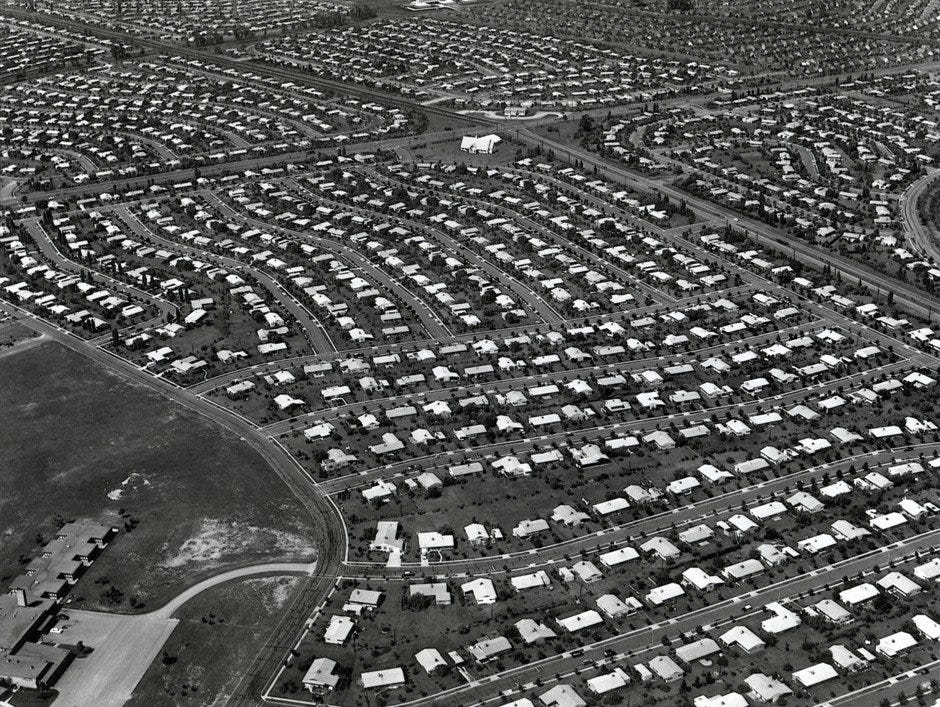
The Federal Housing Administration’s Underwriting Manual, in its 1936 and 1938 editions, conditioned federal mortgage insurance on racial exclusion. The manual instructed federal appraisers that “if a neighborhood is to retain stability it is necessary that properties shall continue to be occupied by the same social and racial classes.” It identified the “infiltration of inharmonious racial groups” as a risk factor on par with “smoke, odors, and fog.” The 1941 Detroit “Eight Mile wall,” where the FHA conditioned mortgage insurance approval on construction of a six-foot concrete wall separating a white subdivision from an adjacent Black neighborhood, is the documented limit case. Between 1934 and 1968, over 98 percent of FHA-backed mortgages went to white borrowers. The FHA single-family insurance program is the largest single mechanism by which the United States government built the postwar white middle class through direct federal subsidy, and the program excluded Black Americans by design and by underwriting practice.
The GI Bill, passed in 1944, contained no racial language in its text. The discrimination was administrative. The Servicemen’s Readjustment Act was administered through state-level veterans agencies, the Veterans Administration, and local banks, all of which enforced the FHA’s racial exclusion at the implementation layer. Ira Katznelson’s When Affirmative Action Was White, the canonical work on this question, documents the scale. In New York and northern New Jersey suburbs, fewer than 100 of the 67,000 mortgages insured by the GI Bill in those areas supported home purchases by non-whites. By 1984, when the GI Bill mortgages had largely matured, median white household net worth was $39,135. Median Black household net worth was $3,397.
The Homestead Act of 1862 distributed roughly 270 million acres of federal land, the largest direct distribution of wealth in American history. More than 99 percent of it went to white families. Between 4,000 and 5,000 Black families received patents. That distribution did not stay frozen in the nineteenth century. The land passed to heirs, and the heirs to their heirs. One study estimates that 46 million living Americans, roughly one in four U.S. adults as of 2000, descend from Homestead recipients. A nineteenth-century giveaway that excluded Black families almost entirely is, measured today, an inheritance carried by a quarter of the country.
These are not accidents of market operation. These are federal-program design choices, documented in the underwriting manuals and the state administrative practice and the patents filed and the census records. The conservative-diagnostic tradition that names the minimum wage and rent control and occupational licensing as government distortions of otherwise-functioning markets has, by its own logic, the obligation to name the FHA and the GI Bill and the Homestead Act as government distortions of the same kind, at far larger scale, with effects that compound across generations rather than within a single labor-market cycle. The conservative reader who invokes the framework against the minimum wage is invoking a framework that, applied to the FHA and the GI Bill and the Homestead Act, mandates correction.
Milton Friedman is the twentieth-century conservative economist whose argument bears most directly on the mechanism of repair. Friedman’s Capitalism and Freedom, published in 1962, devotes its twelfth chapter (“The Alleviation of Poverty”) to the question of what the optimal anti-poverty mechanism would be. Friedman’s answer is unambiguous. “The arrangement that recommends itself on purely mechanical grounds is a negative income tax. The advantages of this arrangement are clear. It is directed specifically at the problem of poverty. It gives help in the form most useful to the individual, namely, cash.”
Friedman argued for cash over administered programs on grounds of efficiency, and the chapter is built around that preference. It has been the operative conservative position on anti-poverty policy for sixty years. Charles Murray’s In Our Hands, published in 2006, extends the same logic: replace the welfare state with a universal cash grant of $10,000 per adult. The libertarian and conservative tradition, when it has considered anti-poverty mechanism on its merits, has consistently arrived at the answer that direct cash transfer is more efficient, more respectful of recipient autonomy, and less distortive than programmatic administration.
The administrative-cost arithmetic confirms it. The Supplemental Nutrition Assistance Program ran in fiscal year 2024 at a federal administrative overhead of approximately 6.1 percent of total federal cost. Medicaid runs at 5 to 6 percent. Section 8 housing vouchers run at 8 to 10 percent. Direct cash transfer from Treasury to recipient, on the 2020-2021 Economic Impact Payment model, runs at approximately 0.5 percent. The administrative cost of delivering $700 billion per year as cash is roughly one-tenth the cost of delivering the same dollar value through a program of equivalent scale.
A reparations program delivered as cash, in the conservative-economic frame, costs an order of magnitude less in delivery overhead than a programmatic alternative. The cash mechanism is what the conservative tradition prescribes when it considers anti-poverty mechanism on its merits. My insistence on cash is the conservative position. It has been the conservative position since Friedman wrote the chapter in 1962.
The remaining conservative-economic concern is that large cash transfers will produce inflation and reduce labor supply, generating the kind of macroeconomic harm that would justify refusing the transfer regardless of the moral case. The empirical literature does not support the concern.
The closest empirical evidence comes from studies of lottery winners. The most rigorous is a study of Swedish lottery players published in the American Economic Review in 2017, which found that winners “reduce their labor supply, yet the reductions are modest” and do not depend on whether the prize arrives as a lump sum or in monthly installments. A 2020 follow-up found the gains in well-being durable rather than fleeting. The pattern across this literature holds steady: people who come into a large windfall mostly save it, buy durable goods, and cut their working hours a little, if at all.
That evidence is suggestive, and it is worth being clear about its limits. One person winning a lottery once is not the same thing as a country committing to twenty years of substantial payments. The scale differs and the duration differs, and a study of individuals cannot settle what a sustained national program would do. What the lottery research establishes is narrower and still useful: the fear that a cash payment turns its recipient into a non-worker has been tested against the best data available and does not hold up at the individual level.
The deeper answer is that the inflation and labor-supply fears confuse two different kinds of money. Reparations is a finite transfer of assets, paid on a schedule over twenty years. It changes who holds wealth in the country. It does not hand anyone a permanent income that removes the reason to work. A family that receives enough to buy a home or start a business has been given a foothold, not a salary. The decision to keep working is not the decision the payment touches. And because the transfer is scheduled, announced, and known to the Federal Reserve years in advance, its effect on prices is more predictable and smaller than the effect of the unanticipated stimulus that the fiscal-multiplier research (Ramey 2011, Auerbach and Gorodnichenko 2012) is built on.
The housing market is the one place the inflation concern has empirical traction. Glaeser-Gyourko-Saiz’s work on housing supply elasticity demonstrates that in high-demand metro areas like San Francisco, Boston, New York, and Los Angeles, supply elasticity is near zero. Every dollar of demand into a supply-inelastic housing market becomes price rather than quantity. Reparations recipients entering homeownership in these markets would face rising prices, some of which would be capitalized into existing white-owned home equity. This is a real distributional problem, and it points to a reform the country already needs, reparations or not. The supply of housing in the most constrained markets has to grow. Several proposals are on the table for how to make it grow, from zoning liberalization to federal pressure on restrictive local rules to the expansion of community land trusts, and a large cash program would sharpen the case for whichever of them works. The honest response to the housing concern is to fix the supply problem that creates it.
The other inflation arguments do not survive serious engagement. The 2020-2021 stimulus produced demand-driven inflation that the San Francisco Fed’s Adam Shapiro estimated at roughly half of the post-pandemic inflation surge, with the other half supply-driven (supply-chain disruption, energy-price shock, shelter-cost lag). A reparations program paid out on a schedule over twenty years, in an economy under no such supply constraint, is a different case.
The honest objection to all of this is not that the frameworks fail but that they do not deliver the conclusion as cleanly as a syllogism would like. Nozick’s rectification principle requires identifiable victims, identifiable wrongdoers, and some defensible account of what holdings would look like absent the injustice; pushed back far enough, the chain of transfers grows too tangled to trace dollar for dollar, and Nozick himself reaches for rough approximation rather than exact restitution. Locke’s labor theory establishes that the product of stolen labor was stolen, but it hands no one a clean map from a particular enslaved person’s expropriated labor to a particular holding standing today. Friedman preferred cash to bureaucracy once a transfer was already justified; his preference settles the mechanism, not the entitlement, and nothing in it commits him to a lineage-based program. None of these gaps is fatal and none is hidden. They are the reason the claim here is not that conservative theory mechanically computes a fourteen-trillion-dollar check.
What the frameworks do is heavier than that. Each of them, applied honestly to the American record, generates a presumption of restitution far stronger than the conservatives who hold them have been willing to admit. Nozick’s principle makes the rectification of unjust acquisition a duty of the just state, and American chattel slavery is the textbook unjust acquisition. Locke’s makes the product of stolen labor owed back, and the labor was stolen at the origin. The government-failure tradition that indicts the minimum wage has, by its own logic, to indict the FHA and the GI Bill and the Homestead Act, which rigged the market for capital itself, at vastly larger scale and across generations. Friedman’s tradition, once a transfer is owed, prescribes the cash that delivers it. The approximation problem bounds the precision of the number. It does not touch the existence of the debt.
The named conservative critics of reparations are working inside frameworks that point toward what they refuse to grant. The contemporary conservative case against reparations is a position held in spite of the conservative-economic case, not because of it.
Part IV — The Critics on Their Own Terms
Begin with Sowell, because the 2002 column is still the load-bearing argument and because its central claim is true in a way the reparations movement has been slow to admit. Sowell argued that an unmet grievance is worth more to a movement than a met one, that concession feeds a demand rather than ending it, that the structure of grievance politics rewards permanence. He is describing something real. American life is full of grievances that work exactly as he says, that have hardened into identities, that no settlement could satisfy because settlement is not what they are for.
His mistake is to assume reparations must be one of them. Whether a grievance can be settled depends on whether it was ever given a structure for settlement. The column treats closure as something a movement either wants or refuses. The sharper question is whether the thing being demanded has an end state that can be specified, paid, and recognized as paid.
The country has done exactly this before. The Civil Liberties Act of 1988 acknowledged the wartime internment of Japanese Americans, paid twenty thousand dollars to each surviving internee, and named the wrong in the text of the law. The Office of Redress Administration opened, made 82,219 payments, and closed on February 5, 1999. The grievance did not become permanent. It did not harden into a movement that needed the demand kept alive. It ended, because the program was built to end: a bounded cohort, a fixed payment, a specific acknowledgment, a closing date.
Reparations on the Darity-Mullen model is built the same way. Eligibility by lineage from American chattel slavery bounds the cohort. The payment scales to documented harm. The acknowledgment is federal and specific. The structure carries its own termination. A demand with those features is the opposite of the permanent grievance Sowell warns about. It is the instrument by which a permanent grievance is retired.
Taken seriously, his own analysis argues for that instrument. If an unmet grievance corrodes, and if the corrosion comes from the grievance going unanswered, the remedy is to answer it on terms specific enough to foreclose its renewal. Refusal does the opposite. Refusal keeps the grievance permanently unmet, which is the dangerous condition Sowell himself identifies. The column diagnoses the disease and prescribes the thing that feeds it.
There is a second Sowell objection, written a year earlier in the Baltimore Sun, and it is the one most people reach for first. “It is self-destructive for any society to create a situation where a baby who is born into the world today automatically has pre-existing grievances against another baby born at the same time, because of what their ancestors did centuries ago.” The sentence has weight. No child born today owned anyone. No child born today was owned.
The objection holds only if the debt runs between the two babies. It does not. The obligor is not a white child. It is the federal government, a legal entity that has run continuously since 1789, that wrote the FHA underwriting manuals, administered the GI Bill through segregated channels, handed out the Homestead lands, and collects the proceeds of prison labor under the Thirteenth Amendment exception clause today. A government does not die and pass its debts to its grandchildren as a fresh moral question. It signs the obligation and carries it. When the United States began paying the surviving internees in 1990, no living official had ordered the internment, and no one thought the payment incoherent on that account. The debtor was the same government. It is the same government here.
Sowell’s most serious claim is empirical, and it has to be granted before it can be met. He has argued for decades that the largest gains against Black poverty came before the policies usually credited with them. The Black poverty rate fell by half between 1940 and 1960. Years of schooling for Black children roughly doubled in the same two decades. This was before the Civil Rights Act, before the Great Society, before affirmative action. The numbers are correct, and they do complicate the standard progressive story about which policies did the work.
But the numbers measure income and schooling, and the reparations claim is about assets. The difference is the whole argument. A Black family in 1955 could out-earn its parents, keep its children in school longer, climb out of poverty as the census counts poverty, and still be shut out of the one mechanism that turned mid-century white earnings into inherited white wealth: the federally insured, federally subsidized home mortgage. The mobility Sowell documents was real. It was mobility in income. The wealth gap measures what that income was never allowed to become. Earnings that cannot be converted into an asset die with the earner. That is the distance between a family that climbed and a family that compounded.
Loury is a different problem. He is not making the timing argument or the permanence argument. He makes an economic objection and a political one, and he makes them as a man who taught the economics.
On The Glenn Show in May 2023, laying out what he called the left-wing case against reparations, Loury put the economic objection plainly. Picture the money taken from a white woman and handed to a Black recipient. “There’s no free lunch. You just redistributed it. You didn’t create anything. You just took somebody else’s money and gave it to someone on the basis of their race.” The transfer moves wealth around. It makes none.
This is one place his economics fails him, and it fails on a point his own discipline settled long ago. Capital is not neutral as to who holds it. A dollar in the hands of someone shut out of the credit market does more work than a dollar already inside it, because the excluded dollar funds the business that could not get a loan. Citigroup’s 2020 accounting put a figure on the exclusion: fair lending to Black entrepreneurs over the prior twenty years would have produced about thirteen trillion dollars in business revenue and 6.1 million jobs a year. That is not wealth moved from one pocket to another. It is output that never existed, because the credit that would have created it was never extended.
Loury is right about a pure transfer. A check handed to someone who already had access to capital moves wealth between ledgers and creates nothing. His error is assuming reparations is that kind of transfer. The wealth gap is in large part a record of capital that was never permitted to function as capital: businesses left uncapitalized, mortgages denied, credit withheld at the moment it would have compounded. Money directed into that gap does the work the original credit would have done. It capitalizes the side of the economy that was held out of the market. The Federal Reserve’s own Small Business Credit Survey still shows Black-owned firms denied financing at far higher rates than white-owned firms with comparable revenues and credit profiles. The capital is being turned away in the present tense. Releasing it produces the growth Loury says reparations cannot produce.
His political objection is the serious one, and the economics cannot touch it. He argues that a politics built around racial reparations works against the multiracial working-class coalition that any lasting reform would need. “Blacks want to cut a side deal with America so that the racial wealth gap will get narrowed instead of lending a hand to the generation’s long project of creating a decent society for everybody.” Build the coalition first, he says, and the gap closes as a consequence.
This is the strongest case against reparations anyone in the debate is making, and it is not an economic case at all. It grants that the debt is real and that the country could pay it, then asks a different question: whether pressing the claim is wise. That question belongs to the argument about how reparations passes and whom it has to bring along, and that argument is not this one. What belongs here is the narrower point that Loury assumes a competition between the reparations and the coalition that he has not demonstrated, and that the broad working-class coalition he would build instead has been promised for a long time without arriving.
John McWhorter, across the table in that same conversation, gave the objection its most revealing turn. He is not against the payments. “I don’t think I would stand athwart every black person in San Francisco, like all 16 of them, being given a million dollars.” His condition is closure. He could support reparations “if it were considered the end,” if enough people agreed the matter was settled and the country had turned a corner. He stops at a practical doubt. He is convinced closure is unreachable, that the present politics of race would take the payment and keep the grievance alive.
That makes his objection a claim about design, and design can be answered. Reparations passed as ordinary legislation could be pocketed and reopened, because a later Congress can revisit it and the demand carries no fixed end. However, a constitutional amendment with a defined funding period, an internal termination, and the harm named in its own text is built to be the end. It writes closure into the structure itself. McWhorter says he could support reparations if closure were real. The arrangement that makes closure real is the one this case has been moving toward.
Walter Williams is the quickest case, because Williams built the argument for reparations and spent a career calling it an argument against welfare.
His 1982 book, The State Against Blacks, makes one sustained claim: that the primary cause of Black economic disadvantage is government action rather than private prejudice. Minimum wage laws price the least experienced workers out of their first jobs. Occupational licensing locks them out of trades. Taxi medallions, trucking rules, the whole machinery of permit and license fall hardest on people with the least capital to absorb them. Williams argued the case with data, and the case was that the state itself stood between Black Americans and economic advancement.
Set that beside his standard objection to reparations, from the column he wrote answering Coates: “What moral principle justifies punishing a white of today to compensate a black of today for what a white of yesterday did to a black of yesterday?” The two arguments cannot both hold. If the primary cause of Black economic disadvantage is government action, which Williams spent decades demonstrating, then the cause has a name, and the name is the government, the same continuous entity across every era, not a white person of yesterday or today. Williams’s life work identifies the defendant. The reparations claim is the bill that follows from his own diagnosis.
His moral principle objects to punishing one race to compensate another. Reparations on the institutional model does something else. It charges a government for what the government did and pays from the general treasury, the way every federal obligation is paid, by a public that did not individually commit the wrong and is not individually accused of it. A white taxpayer is no more punished by a reparations appropriation than by any other line item she did not personally authorize. And once Williams’s economics are taken seriously, his principle points the other way. If the government caused the harm, the government owes the repair. Williams found the cause and refused the conclusion.
His remaining worry is the familiar one about labor supply, that a large transfer dulls the will to work. The best evidence runs against it. Large windfalls cut working hours modestly if at all, and a finite transfer of assets is not a standing wage that removes the reason to earn one.
Three critics, three frameworks, one result. Sowell’s account of grievance argues for the settlement structure he would not consider. Loury’s economics, brought to bear on capital that was never allowed to function, describes the growth he says is impossible. Williams’s life work names the government as the cause and stops one inference short of the repair. Each man, followed to the end of his own argument, arrives where he refused to go.
One objection survives the trip. Loury’s political claim, that a reparations politics could fracture the coalition a broader justice would require, is not touched by anything in the economics, and I have not answered it here. It is the real argument, and it is a different one. It does not dispute that the country can pay, or should pay, or owes the debt. It grants all of that and asks whether paying is wise. That question waits.
Part V — The Wilderness
Grant all of it. Grant that the debt is real, that the country can afford it, that every conservative framework worth the name reaches the cash conclusion once it is applied to the record honestly. A reader can grant the whole of it and still hold the one objection that has outlasted all the others: none of this matters, because reparations cannot pass.
That objection is not lazy, and it is not made in bad faith. It is the most empirically grounded position in the entire debate, and the political record of the last several years confirms it at every level.
Take the bill that asks for the least. HR 40 pays no one. It acknowledges no debt and transfers no dollar. It proposes a commission to study whether reparations should be considered at all. John Conyers first introduced it in 1989. It has been reintroduced in every Congress since, carried now by Ayanna Pressley, and it has never once come to a vote on the floor of either chamber. A bill that asks only for a study has spent thirty-seven years unable to reach the floor.
Voting rights tells the same story louder. The John Lewis Voting Rights Advancement Act would restore the preclearance regime the Supreme Court struck down in 2013. Voting rights poll far better than reparations, and the bill carries the name of a man the whole Congress stood up to eulogize. It has twice failed to break a Senate filibuster, in November 2021 and again in January 2022. When the country cannot pass the popular bill with the martyr’s name on it, the unpopular one has no statutory route left to try.
In January 2025 the federal government ended its diversity, equity, inclusion, and accessibility programs by executive order and revoked Executive Order 11246, the 1965 Johnson requirement that federal contractors not discriminate, which had stood for sixty years. The apparatus built to address the milder version of the problem is being taken apart. In March 2026 the United Nations General Assembly voted 123 to 3 to name the transatlantic slave trade a crime against humanity, and the United States cast one of the three votes against, on the stated ground that the trade had not been illegal at the time it was carried on. The country will not study the question. It is dismantling the milder remedies it had. It will not add its name to a declaration that costs it nothing. On the present evidence, the political objection is simply right.
I will not pretend to settle it here. Answering it honestly takes more than a paragraph and more than this pamphlet. Whether a reparations politics can actually be built, whether the coalition exists on the left to carry it and on the right to tolerate it, whether the framing that has sunk the demand for a generation can be changed, is a real question and a hard one, and it is the subject of the piece that follows this one. It deserves its own argument. It will get one.
What can be said here is narrower, and it comes out of the wilderness rather than around it. The statutory failure runs deeper than any one Congress or any one administration. It is structural. The incentives that have kept HR 40 off the floor for thirty-seven years will not dissolve in the thirty-eighth. A federal majority assembled to pass a reparations statute could be dispersed by the next election and the statute repealed by the next majority, which is exactly the doubt McWhorter raised: a payment the politics can reopen is not closure. A wrong written into the constitutional order is not closed by a law that sits beneath that order and can be repealed from beneath it.
That leaves one road. An amendment is the only instrument that can lift the obligation above the reach of the next majority, write the harm into the founding text, and settle the matter with the finality the whole case requires. It is also, by any honest count, the steeper climb. A statute needs a simple majority, and the statute failed. An amendment needs two-thirds of both houses, or a convention called by two-thirds of the states, and ratification by three-quarters of them. The road that remains asks far more than the road that closed.
The argument for why the steeper road is nonetheless the passable one, how an amendment like this actually moves through the Congress or a convention and then through the legislatures of thirty-eight states, is the work of the next piece, and it is not finished work. The claim here is only this. The easy road was never open, and the years since 1989 have proved it. The constitutional road is the only one the country has not yet tried. Its instrument has to be built before the politics of passing it can begin.
Part VI — The Constitutional Vehicle
An amendment, then. Naming the form is the easy part, and the form by itself guarantees nothing. The country has put guarantees into its Constitution before and left them unenforced for the better part of a century, and the reason it could is built into the way they were drafted.
The Thirteenth, Fourteenth, and Fifteenth Amendments abolished slavery, made the freedmen citizens, and barred the states from denying the vote by race. Each of them closes the same way. “Congress shall have power to enforce this article by appropriate legislation.” The substance was constitutional. The enforcement was left to congressional will, and congressional will, through the collapse of Reconstruction and the long rise of Jim Crow, declined. The Fifteenth Amendment guaranteed the vote in 1870, and the country did not make the guarantee real until the Voting Rights Act of 1965, ninety-five years later. The promise sat in the text the whole time. The text gave Congress permission to keep it and never required Congress to keep it.
A reparations amendment built on that template would fail the same way, and sooner. An amendment that gave Congress the power to pay reparations would hand the question straight back to the body that has already refused it. The design has to invert the template. The obligation cannot be a permission Congress may exercise at its leisure. It has to be a duty that binds, and it has to carry its own enforcement, so that congressional inaction stops working as a veto.
The device for that is an amendment that executes itself. Some constitutional provisions wait on Congress to act; others take effect the moment they are ratified. The Sixteenth Amendment made the income tax operative on ratification in 1913. The Twenty-Sixth lowered the voting age to eighteen in 1971 with no enabling statute required. A reparations amendment can be written on that model. It can give Congress a defined window to build the program it would prefer, and provide that if Congress lets the window close, the obligation takes effect on its own, on a schedule the amendment itself sets out. Congress keeps the first move. It loses the power to make the first move never arrive.
No prior amendment has carried a trigger of just this kind, a grace period followed by self-execution, and the novelty is worth naming plainly. It is a novelty of arrangement. That a constitutional provision can operate without waiting for Congress was settled a century ago, by the Sixteenth Amendment and, later, the Twenty-Sixth. The trigger only puts a clock on the waiting.
The harder design problem is who would be eligible, and it is the one most likely to end up in court. In 2023, in the Students for Fair Admissions case, the Supreme Court held that any government classification drawn by race has to survive the hardest test the law applies, a test such classifications almost never survive. A reparations statute that named its recipients by race would walk straight into it. A municipal program in Evanston, Illinois, is being sued on precisely that ground.
That test is the reason the remedy has to be constitutional, and not in the way the question is usually argued. The instinct is to search for a classification that can survive strict scrutiny. The amendment does something better: it removes the case from the court that would apply the test. Strict scrutiny is how the Equal Protection Clause polices statutes. An amendment is not subordinate to the Equal Protection Clause. It stands beside it, at equal constitutional rank, and where two constitutional provisions meet, the later and more specific one governs. The Sixteenth Amendment did not have to survive the doctrine that had struck down the income tax; it overrode it. A reparations amendment stands in that same relation to the equal-protection objection. The strict-scrutiny problem is a statute’s problem. The amendment does not win the fight. It ends it.
Lineage is still the right way to draw the line, but for reasons of justice rather than litigation. The criterion the economists William Darity and Kirsten Mullen developed turns on documented descent from a person enslaved in the United States before the Thirteenth Amendment, and it fits the harm exactly: the debt is owed to the descendants of specific people wronged by a specific government, and descent is the whole of the claim. It also disposes of the objection usually raised first. Reparations of this kind do not reach the descendants of people who came to the country after slavery ended. A family that arrived in 1905, or 1965, or last year has no ancestor who was enslaved in the United States, and eligibility runs to that ancestor and to no one else. The criterion does not have to argue about recent immigrants or draw a line against them. It simply does not reach them.
None of this depends on persuading a court that descent is not race, because the amendment does not have to. But the argument is there if it is ever wanted. Erwin Chemerinsky, the dean of Berkeley’s law school, testified before the California reparations task force that building eligibility on lineage rather than race puts a program on the firmest ground there is against the strict-scrutiny attack, and he was right about the statute he was advising. Lineage has independent footing in the case law: in Morton v. Mancari the Court treated a classification as political and historical rather than racial because it tracked a relationship to a federal institution rather than skin color. A court determined to read ancestry as a stand-in for race could still try, and one did, in a 2000 case striking down a Hawaii voting scheme limited to people of Native Hawaiian descent. For a statute that case is a live threat. For an amendment it is not, because the amendment states in its own text that eligibility rests on the documented harm rather than the race of the people who suffered it, and a court reading an amendment cannot easily overrule the amendment’s own account of what it is doing. The statutory arguments are a floor the amendment never has to stand on.
Then there is the money, and the trap in it is annual. A program that depends on Congress voting the appropriation every year can be starved one year at a time, which is how durable commitments quietly die. The amendment escapes the annual fight by fixing the obligation as a share of the economy: a set percentage of national output, somewhere in the range of two to two and a half percent, every year for twenty years. The figure rides the economy up and down. A strong year is more dollars and a recession is fewer, and every year it is the same fraction of what the country produces, which is the working definition of a commitment the country can always meet.
There is nothing exotic in sizing a national obligation this way. The members of NATO commit to spend two percent of their output on defense, indexed exactly so, for exactly this reason: a share of GDP is a promise that adjusts itself to capacity and never has to be reopened when the economy turns. A reparations floor of two to two and a half percent of output is Marshall-Plan scale, sustained longer and turned inward.
None of this is a step into the constitutionally unknown. Two other countries have run the experiment, and between them they draw the blueprint. Germany has paid reparations for the Nazi genocide for more than seventy years, over eighty billion euros and still counting, the whole of it alongside the postwar boom, the Wirtschaftswunder, that rebuilt West Germany into the richest economy in Europe. Large, structured reparations do not wreck an economy; the German case is the seventy-year proof.
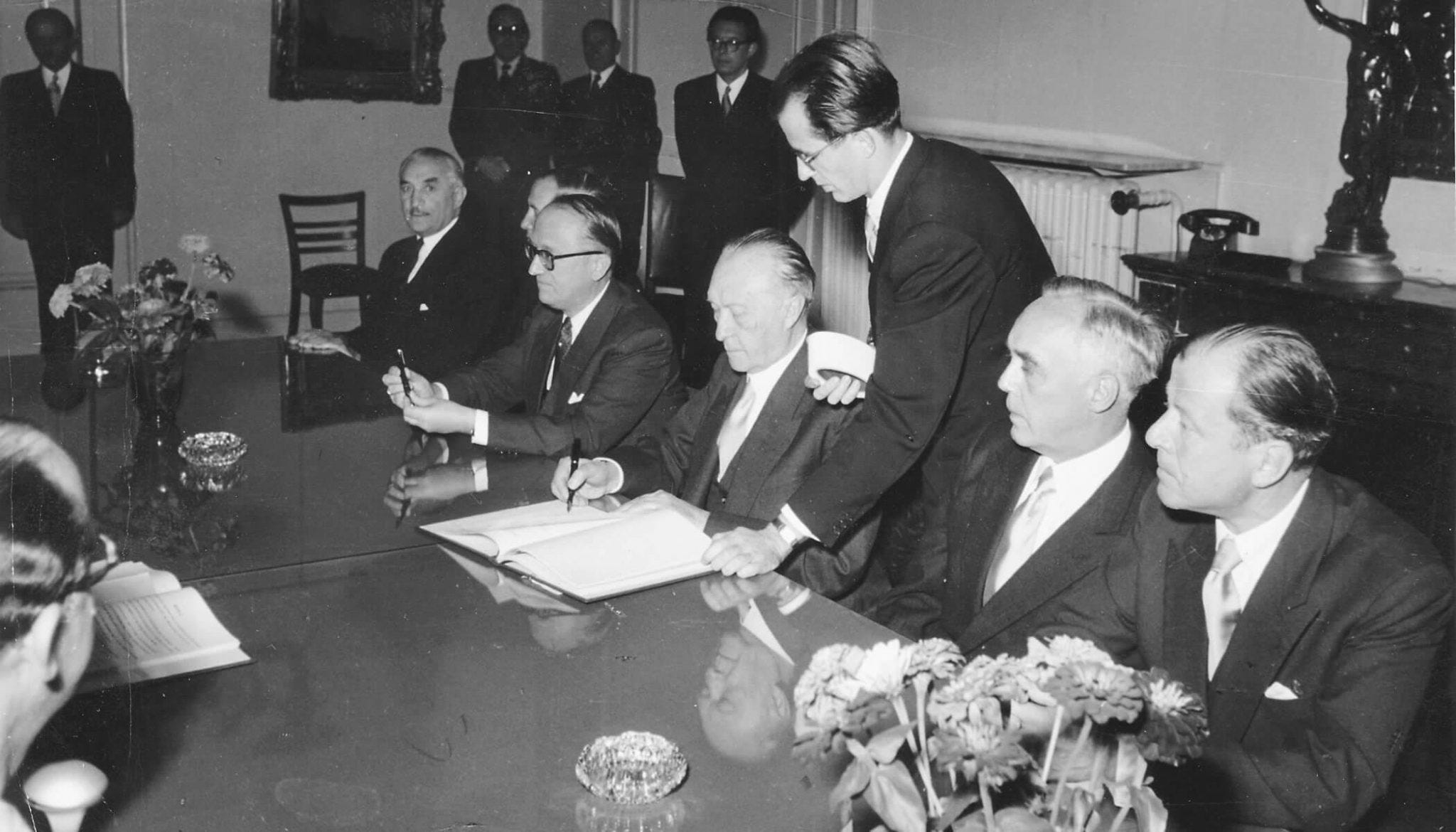
But Germany never wrote the obligation into its constitution. It rests on a chain of agreements that have to be renewed and renegotiated, and it has stayed politically exposed for seventy years for want of entrenchment. South Africa made the opposite mistake. It wrote reparation into its interim constitution in 1993, in language that named the aspiration without quantifying the duty or making it enforce itself, and the legislature that followed deflated the promise to a fraction of what the country’s own truth commission had recommended.
The two failures run in opposite directions, and together they specify the design. Germany shows that reparations left out of the constitution stay permanently exposed. South Africa shows that reparations written into the constitution without a quantified, self-executing duty get hollowed out when the statute is drafted. The design that survives both is the one already described: entrenched in the Constitution, against the German exposure, and quantified and self-executing, against the South African deflation. There is nothing radical in it. It is the cautious reading of the comparative record, the one that keeps what worked in each country and discards what failed.
The vehicle for proposing an amendment exists, and it has been driven under pressure before. When the country wanted its senators elected directly by the people instead of chosen by the state legislatures, the Senate that would have had to surrender the power refused to propose the change. So the states moved without it. By 1912, thirty-one of them had filed applications for a constitutional convention to force the question, and the credible approach of that convention frightened the Senate into proposing the Seventeenth Amendment itself, ratified within fifteen months. The machinery is real, and it has worked. Whether it can be made to work for this, whether the votes are there in the Congress or the statehouses and how a coalition for them is built, is the question the next piece takes up.
The instrument, then, is an amendment that obligates where the Reconstruction Amendments only permitted; that executes itself on a fixed schedule if Congress lets its window close; that anchors eligibility in descent from the enslaved and writes the harm into its own text, beyond the reach of the strict-scrutiny attack; and that funds the obligation as a fixed share of the national economy for twenty years. The design is specified. What remains is the text itself.
Part VII — The Amendment
The amendment does two things at once. It strikes the language of slavery still standing in the Constitution, and it establishes the obligation to repair what that language built. Cleanup and establishment, in a single instrument.
Start with what is still there. The country has spent the better part of a decade arguing about monuments: which statues to pull down, which names to scrape off which schools and forts and courthouses. The argument has mostly walked past the founding document itself, where the legal scaffolding of slavery remains, in the original hand, unrepealed. Most of it is dead letter, superseded in effect and left standing in the text. One clause is not dead. And the country has never once gone back to remove any of it.
The framers wrote slavery into the Constitution three times and never used the word. They wrote “other Persons,” and “such Persons,” and “Person held to Service or Labour.” The thing was in the document; the name was kept out. The word slavery does not appear in the Constitution until the amendment that abolished it, and even there it arrives with a door left open.
The first clause is in Article I, where the Constitution lays out how to count people for representation. Free persons count whole. Then: “three fifths of all other Persons.” The other persons were the enslaved, rated at three-fifths of a human being so that the slaveholding states could turn people they owned into congressional seats and electoral votes. The Fourteenth Amendment ended the counting in 1868. The words are still in Article I.
A few clauses later comes the second. It forbade Congress from ending the slave trade before 1808: “The Migration or Importation of such Persons as any of the States now existing shall think proper to admit, shall not be prohibited by the Congress prior to the Year one thousand eight hundred and eight.” It bought the trade twenty more years, and the lives that came in on it. The date passed in 1808. The clause stayed.
The third is in Article IV. “No Person held to Service or Labour in one State, under the Laws thereof, escaping into another, shall, in Consequence of any Law or Regulation therein, be discharged from such Service or Labour, but shall be delivered up on Claim of the Party to whom such Service or Labour may be due.” It made every state, free states included, an instrument of capture, bound to return the escaped to the people who claimed to own them. The Thirteenth Amendment made it inoperative in 1865. The text remains.
The fourth is the sharpest, because of where it sits. Article V is the article that lets the Constitution be amended at all. Into it the framers wrote a single exception: no amendment made before 1808 could touch the slave-trade clause. They used the amendment power to put slavery’s commercial engine beyond the reach of the amendment power, for twenty years. The provision is spent and the year it named is two centuries gone. To strike it now is to use the amendment power to erase the one place the founders tried to fence the amendment power away from slavery. The instrument finishes the correction the language was written to prevent.
The fifth is the one still working. The Thirteenth Amendment abolished slavery in 1865, and it is where the word at last enters the Constitution: “Neither slavery nor involuntary servitude.” And then, in the same sentence, the door: “except as a punishment for crime whereof the party shall have been duly convicted.” That clause is not dead letter. It is the legal ground on which incarcerated people are made to work today, across the American prison system, for cents an hour or for nothing at all, producing goods and services worth billions of dollars a year. The exception the abolition amendment carried inside it is the single piece of the slavery architecture that never stopped paying out. Striking it ends the last working clause of the system the rest of the amendment buried.
Striking the five clears the document. It repairs nothing. Pulling out the language that authorized the harm is not the same as answering for the harm, and a cleanup that stopped there would be one more apology without restitution, the kind the country and its churches have already brought to a high finish. The establishment is the other half. It is the half that pays.
The establishment runs in six sections, and the first carries the weight, because it does in the document’s own voice what the strikes only clear room for. It names the harm. It states that the United States sanctioned chattel slavery for seventy-six years, that the systems of legal subordination that followed it did continuing damage to the descendants of the enslaved, and that the country is obligated to repair it. The original document used the word slavery only to abolish it. This is the section in which the document accepts the bill.
The rest is machinery, and the machinery is the argument of the preceding pages made literal. Eligibility runs by documented descent from a person enslaved in the United States before 1865, the lineage criterion that fixes on the harm rather than the race. Funding is set as a floor of national output, a constitutional minimum that cannot be fought down and starved one appropriation at a time, with the operative rate set where it needs to be to retire the documented debt across the twenty years. A commission has twenty-four months to design the program and Congress has forty-eight to enact it, and if Congress lets the window close the obligation pays itself out from the Treasury on the schedule the amendment fixes. Payments run per capita to the living, with the shares of children held in trust until they come of age. The obligation ends when the twenty-year schedule is complete, and a successor commission certifies that it is complete, because the closure is written into the text. The last section gives Congress the power to enforce the rest, the one place the amendment borrows the Reconstruction language, and it borrows it as a supplement to a duty that already executes itself, not as a substitute, so that it cannot become the loophole the enforcement clauses of 1865 and 1868 and 1870 became.
Set down in full, the amendment reads:
Section 1. The following provisions are repealed: the Three-Fifths Clause (Article I, Section 2); the clause prohibiting Congress from ending the slave trade before 1808 (Article I, Section 9); the Fugitive Slave Clause (Article IV, Section 2); the proviso of Article V shielding the foregoing slave-trade clause from amendment before the year 1808; and the words “except as a punishment for crime whereof the party shall have been duly convicted” in Section 1 of the Thirteenth Amendment.
Section 2. The United States acknowledges that the institution of chattel slavery, sanctioned by this Constitution from 1789 to 1865, and the system of legal and de facto subordination that followed it, including the Black Codes, convict leasing, the discriminatory administration of federal housing, education, and veterans’ benefits, and the denial of equal citizenship under Jim Crow, inflicted a continuing harm upon the descendants of persons enslaved within the United States. The United States is obligated to make integral reparation for that harm.
Section 3. Eligibility shall be established by documented descent from a person enslaved within the United States before the ratification of the Thirteenth Amendment. Congress shall provide for verification.
Section 4. For a period of twenty years following the enactment of implementing legislation, the United States shall appropriate in each fiscal year a sum not less than two percent of the Gross Domestic Product of the preceding fiscal year. Such sums shall be held in trust and disbursed to eligible recipients under rules established by Congress consistent with this Article.
Section 5. Congress shall, within twenty-four months of ratification, establish a commission to determine the form and schedule of payments and to report to Congress. Congress shall enact implementing legislation within forty-eight months of ratification. If Congress fails to enact implementing legislation within that period, the obligation under Section 4 shall be self-executing, and the Secretary of the Treasury shall disburse payments in equal annual amounts to each eligible recipient under the rules set forth in Section 6.
Section 6. Payments shall be distributed per capita among all eligible recipients then living. The shares of recipients who are minors shall be held in federally secured trust until they attain majority. The obligation shall terminate upon completion of the twenty-year schedule, and completion shall be certified by a successor commission.
Section 7. Congress shall have power to enforce this Article by appropriate legislation.
Five clauses struck, six sections written. The strikes pull the country’s oldest euphemisms for slavery out of the text that still holds them. Five clauses struck, six sections written. The strikes pull the country’s oldest euphemisms for slavery out of the text that still holds them. The establishment says, plainly and in the document’s own voice, what the country owes.
Part VIII — Unpaid
How a country pays a debt this large was the question. The answer turns out to matter less than what it reveals. The country can pay. It could always pay. The refusal was never about the money, and it was never about the frameworks, which require the payment, or the Constitution, which permits the instrument that delivers it. What was missing was never the means. What was missing was the will, and for a century and a half the will has dressed itself in the language of impossibility.
The case for paying has been made before, and made well. Twelve years ago Ta-Nehisi Coates laid the moral and historical account before the country in the pages of The Atlantic, and the country read it, and admired it, and did nothing. The case was true, and it did not move, because it was addressed to a conscience that had already resolved not to be moved, and because it was spoken in a language half the country had trained itself to stop hearing: the language of historical guilt, of moral debt, of a wrong that asks to be felt before it can be repaired.
The other language was available the whole time. A country that will not be argued out of its money by an appeal to guilt can still be held to the things it claims to believe: to property honestly acquired, to markets the government has no right to rig, to debts an institution runs up and is bound to pay, to a Constitution that means what it says. That is the case made here. It is the conservative case, and it arrives where Coates arrived, by a road the people who waved him off cannot wave off without walking away from their own first principles.
Whether the case will be enough is a different question, and honesty does not pretend to have settled it. An argument can be unanswerable and still lose. The distance between a sound amendment and a ratified one runs through the politics of getting it adopted, the coalitions and the statehouses and the long arithmetic of thirty-eight states, and that politics is the subject the next piece takes up. Nothing here promises it can be crossed.
A lever is what a person reaches for when a weight is too great to lift by hand. The debt is the load, fourteen trillion dollars of it, heavier than the country has ever been willing to look at straight on. Ordinary politics cannot raise a weight like that; it has spent thirty-seven years unable to raise a bill that only asked to study the question. The amendment is the lever, long enough to move what bare effort cannot. The lever has been lying within reach the entire time. The country has declined to take hold of it.
The American debt is not unpayable. It is unpaid. The whole of the country’s honesty about itself lives in the space between those two words, and the amendment is where the space is closed, where the accounting comes to an end and a ledger left open since 1789 is finally allowed to balance. The instrument is on the page now. The excuses are spent. The economic and legal objections have been met. The only question left is the oldest one a country can be asked, and the one it likes least to answer: whether it means the things it says it believes.