I Love You Guys
How public money built the first trillionaire—and lost its grip on him.

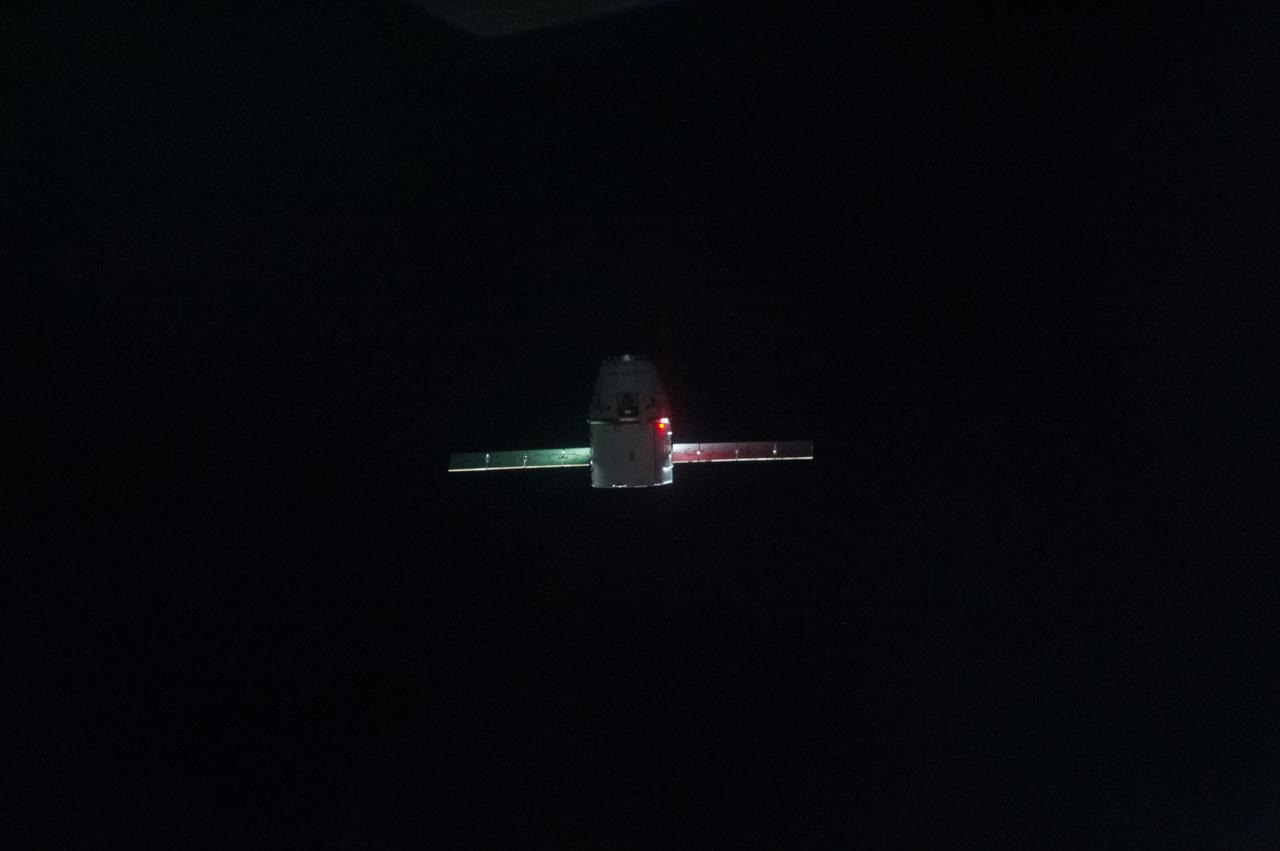
On the evening of December 23, 2008, Elon Musk got the phone call that saved everything he had built. SpaceX was, by any honest accounting, finished. The first three flights of the Falcon 1 had failed. The fortune he had carried out of PayPal was nearly gone, spent on a rocket company and a car company that both looked, that winter, like the expensive end of a rich man’s conviction. His marriage was ending. He has called 2008 the worst year of his life, and nothing in the record argues otherwise. Then NASA called to say it was awarding SpaceX a $1.6 billion contract to carry cargo to the International Space Station—enough to keep the company alive long enough to make the Falcon 9 and the Dragon capsule real. Years later Musk described the moment, and the line is worth quoting exactly. “I couldn’t even hold the phone,” he recalled. “I just blurted out, ‘I love you guys.’”
I love you guys. Sit with it before the reflexes take over—before the people who despise him rush to explain that he is a fraud, and the people who worship him rush to explain that he is a god. He was neither, on that phone. He was a man who knew exactly who had just saved his life’s work. The government had taken the founding risk private capital would not, and the founder, in the one moment when it was too late to posture, said thank you.
Eighteen years later, on June 12, 2026, the man who said it became the first trillionaire in the history of the species. SpaceX went public on the Nasdaq in the largest stock offering ever recorded—$75 billion, more than twice the $29 billion Saudi Aramco raised in 2019—and within minutes of the opening bell his net worth crossed into thirteen digits. He had built, in the years between, genuinely remarkable things: rockets that land themselves, a satellite network reaching places the grid never did. And he had arrived somewhere no American has stood before—a position from which the same government that once saved him can no longer meaningfully hold him to account.
He is neither a villain nor a hero. Both answers are wrong, and they are wrong in the same way: each puts one man where a system belongs. What turned a $1.6 billion rescue into a trillion-dollar fortune—and left the republic that paid for the rescue unable to regulate the man it made—was never his character. It was the design.
·
By Bloomberg’s count, Musk is now worth more than the next four richest people on earth combined; the second-wealthiest holds a fortune barely a quarter the size of his. The astronomical comparisons write themselves, and most of the coverage has obliged. But they mislead, because they treat the trillion as a quantity of money. It is not. It is a quantity of belief.
The public offering raised $75 billion—real money, paid in for a slice of the company. Musk’s trillion is a different kind of figure. It is the paper value of what he owns, his stakes in the companies he controls and SpaceX above all, and almost none of it exists as cash. SpaceX, the company at the center of that fortune, is priced at about ninety-four times its revenue—a multiple above Nvidia’s, above Amazon’s, above even Palantir’s, the stock financial writers already reach for when they want a synonym for irrational exuberance. To pay that price is to place a wager on 2035. One valuation analyst, working out what the company would have to do to justify it at even a modest return, arrived at the figure: SpaceX would need $1.1 trillion in annual revenue within a decade—the first sales number in history that would have to be written with a t. That means growing revenue by half, every year, for ten years running. The final year’s leap alone, in that model, is as large as all the growth Amazon has managed in the past six years combined. The fastest year Nvidia ever had was a quarter of it. There is no precedent. What the market has bought is not a company at the price of its earnings but a story at the price of its ambition, and it has never priced a story this high.
What kind of power is this, exactly?
Unrealized equity is not income. The American tax system taxes income, which means a fortune held as stock can be borrowed against, lived on, and handed to heirs at a stepped-up basis that erases the gain—compounding across a lifetime and beyond without once triggering a tax. This is not a loophole, not an abuse, not a clever accountant’s trick. It is the tax code working as it was designed to work. A man can become the wealthiest human being alive and, in the eyes of the law, never have earned a dollar.
·
The story America tells about men like Musk has a fixed shape. A visionary bets everything. He takes the risk no one else will touch. He builds, from nothing, by force of will, a thing the world did not know it needed. It is a good story. It is the story Musk’s own 2008 desperation seems, at first, to confirm—the lone founder at the edge of ruin.
The documented history is more crowded. Musk did found both companies with his own money—the PayPal fortune, bet on rockets and electric cars when almost no one else would, and very nearly lost in the crash of 2008. That part of the myth holds. But what saved the companies was not his conviction. NASA’s cargo contract that December kept SpaceX breathing when it was all but bankrupt; the car that finally made Tesla a real company, the Model S, was built in a factory financed by a federal loan secured when no private lender would touch an unproven automaker. Tesla repaid that loan early, with interest—a pro-Musk reader will stop me here to say so, and the point survives. The government took the founding risk private finance refused, exactly as it is designed to. Its reward was a little interest; the man it backed kept the equity that is now worth a trillion dollars.
Nor was this a one-time rescue. A Washington Post accounting found roughly $38 billion in federal contracts, loans, subsidies, and tax credits flowing to Musk’s companies over two decades; SpaceX alone holds some $22 billion in federal contracts. Much of that is not charity but the government acting as the founding customer—buying the launches, building the demand, underwriting the market into being. And the pattern is older and larger than Musk. The state does not only fix markets when they fail; it creates them, absorbing the founding risk in the long unprofitable years before there is any product to sell, then watching private capital arrive once the danger has passed to commercialize what public money made possible. The satellite positioning in every phone, the network it connects to, the touchscreen under your thumb, the voice that answers when you speak to it: each was funded into existence by government before it was ever a business. The private actor enters late, captures the upside, and is canonized as the sole author. The public risk came first; the private reward came after; and the story we tell erases the one to glorify the other. I love you guys is the tell. In the moment that mattered, Musk knew exactly who had saved him.
·
If the story stopped there, it would be the ordinary story of American capitalism—public risk, private reward, the socialized launch and the privatized landing. That story is old. What makes this fortune a different kind of object is what happened to the mechanisms that were supposed to govern it. Two of the instruments a republic uses to hold private power accountable are the regulators who oversee it and the courts where it can be sued. In a single stretch of 2025, both gave way: the regulators first, the courts by that spring, around one man while he served inside the government.
On his first day in office the new president created a cost-cutting office and placed Musk at the head of it, a special government employee with a four-month clock. Within days, in a purge of more than a dozen inspectors general, the five whose agencies were investigating his companies were swept out with the rest; at the Labor Department alone, those investigators had seventeen open inquiries into Tesla and SpaceX. Over the months that followed, federal enforcement actions against his companies were halted or dropped, his firms among dozens whose cases quietly went away. He did not sign the firings himself—the administration did, while he ran the initiative cutting the government around him. He did not have to. A man whose companies were under federal investigation was now running the office cutting the agencies that investigated them, and few of those inquiries outlived his months in the building.
In the same season, the courts. The year before, a Delaware judge had voided Musk’s 2018 Tesla pay package in a suit brought by a shareholder who held nine shares, and Tesla had answered by reincorporating in Texas. That May—while Musk was still running the cost-cutting office—Texas passed a law letting a company require that a shareholder hold three percent of its stock before suing the board, and Tesla adopted the rule the day after the governor signed it. Three percent of Tesla, the day the board adopted the rule, came to about thirty billion dollars. Exactly four shareholders cleared that bar: Musk and the three great index-fund houses, Vanguard, BlackRock, and State Street, none of them inclined to sue the boards they help seat. A company that a nine-share owner could once haul into court can now be challenged by almost no one. The last internal check on the board was not beaten in court. It was placed beyond the reach of all but four.
With the overseers gone and the courthouse door narrowed to four, the empire consolidated. It had been assembling for years: Twitter bought in 2022 and renamed X, xAI founded in 2023, the two folded together in the spring of 2025 so that the platform and the AI company became one. Then, in February 2026, by value the largest merger ever recorded: SpaceX absorbed xAI, and with it X, in an all-stock deal valuing the combined company at $1.25 trillion. The company made a strategic case for it: rockets, satellites, and AI under one roof, orbital data centers no rival could build. Perhaps. The financial effect was also specific. xAI was losing money at a staggering rate, billions a year against a few billion in revenue; the launch and satellite-internet businesses that now make up most of SpaceX’s revenue were not losing at anything like it. Folded together, the winning ventures could carry the losing one, and the whole could be sold as a single story. One entity, one balance sheet, one number.
That number went on sale on June 12, 2026. The offering turned the whole of it—the rockets, the satellite network, the AI, the platform, all of it consolidated and shielded under one man—into publicly traded stock, and his share of that stock into the first trillion-dollar fortune on earth. The public that had taken the founding risk was left holding neither the oversight nor the upside. It could buy shares, like anyone.
This is the loop closing on itself. Public investment builds the company; the founder captures the upside; the regulators who might have checked him are cut while he serves inside the government; the courts narrow under a law his adopted state passes; the pieces consolidate; the offering cashes them out. It is not corruption, exactly, if corruption means breaking the rules. It is the rules, followed all the way to the end by someone with the access and the will to follow them. I am not outside this machine, either. These words may reach you over his satellites, or on the platform he owns. The outside is getting smaller.
·
The reactions arrived on schedule. Senator Elizabeth Warren did the arithmetic of obscenity: the typical American household, she noted, would have to work more than eleven million years to earn what Musk now has, and she called again for a wealth tax. A Senate candidate put it more bluntly: Elon Musk just became the world’s first trillionaire. Let’s make sure he’s also the last. On the right, the man himself was the marvel—the president had already set him in the pantheon of American inventors, a “super genius” beside Edison—and beneath the praise ran the catechism of the free market: no politician issued a decree, no one was forced, investors chose freely, and the market did what markets do.
The two responses look opposite and make the same error. One reaches for a villain, the other for a genius, and both put the whole of the story inside a single man. Tax the villain and the machine that made him keeps running, ready to make the next. Crown the genius—or wave the outcome through as the free verdict of a market—and you defend as free an enterprise that ran on public money from the first, one in which the risk was everyone’s and the fortune one man’s. Neither response looks at the machine: that it was built, that it was captured, that it works as we watched it work. Before we argue what to do about a trillion-dollar fortune, we might first agree on what it is.
·
The country has met this before, and once knew what it was. When Theodore Roosevelt set out to break the trusts, his case was not that Rockefeller was a wicked man; it was that a concentration of private power past a certain size is incompatible with a republic—that a free people cannot govern itself while an unelected private party holds power rivaling the government’s own. The argument is structural, and it applies here with a precision that should unsettle anyone who sits with it. One private citizen, answerable to no electorate and now shielded even from the shareholders who might once have sued him, controls the rockets NASA relies on to carry its astronauts to the space station, the satellite network the military has built into its own battlefield communications, a large artificial-intelligence operation, and the platform where much of the country’s politics is argued. The government did not merely help fund all this; it now depends on it. And a republic is in trouble when its government depends this heavily on a single private empire, and has watched, in the same years, the means of holding that empire to account slip away one by one.
And the machine built real things; this has to be said plainly, because a critique that sneers at the engineering has already lost. Reusable orbital rockets are a genuine achievement, not a financial fiction, and the people who know how hard the problem is do not speak of them lightly. The satellite network puts real internet into places that never had it, which is no small thing to those who finally have it. But the rockets and the fortune are not two separate things. They grew from the same root, on the same public money, by the same logic: the arrangement that put reusable rockets in the sky is the one that gathered a trillion dollars and the country’s critical infrastructure into a single unaccountable pair of hands. It did not have to be built this way—a public that takes the risk can keep a share of what it produces, and has before—but this is the way it was built, and the achievement and the concentration arrived as a pair. The rockets are real. So is the price: a free country, dependent now on a power it did not choose and cannot recall.
·
What kind of power, then, is a trillion dollars of this sort?
It is not land, which can be taxed and walked across and seen. It is not a factory, which sits somewhere and employs someone and can be regulated by the state that chartered it. It is not even an old media empire, with its presses and its license to revoke. It is a trillion dollars of belief about the future, fused to infrastructure the country has come to depend on, shielded from the suits that might once have checked it, and amplified by a season spent inside the very government that was supposed to constrain it. The first trillionaire is not a milestone in human achievement, the way the coverage keeps wanting him to be. He is a stress test, and the republic is the thing being tested.
The republic built instruments for exactly this: antitrust laws, regulatory agencies, courts where a man with nine shares could once call a board to account. Every one of them has since been captured, escaped, or repealed. The task in front of us is not, in the end, about Elon Musk; he is the symptom the machine produced first. It is whether the instruments of self-government can be rebuilt at all—and that work cannot begin until we agree on what we are looking at. Not a villain. Not a hero. A system, run all the way to the end of its logic.
The man who said I love you guys to the government that saved him is worth a trillion dollars now. The government that saved him cannot do without him. That is not an irony. It is the design, showing us its face.